


Page 83 - Demo
P. 83
MATTHEW -
the Messiah, the Son of God.” 64c Jesus said to him in reply, “You have said so.* But I tell you:
From now on you will see ‘the Son of Man seated at the right hand of the Power’ and ‘coming on the clouds of heaven.’”
65Then the high priest tore his robes and said, “He has blasphemed!* What further need have we of witnesses? You have now heard the blasphemy; 66what is your opinion?”They said in reply, “He deserves to die!” 67* d Then they spat in his face and struck him, while some slapped him, 68saying, “Prophesy for us, Messiah: who is it that struck you?” Peter’s Denial of Jesus. 69e Now Peter was sitting outside in the courtyard. One of the maids came over to him and said, “You too were with Jesus the Galilean.” 70* But he denied it in front of everyone, saying, “I do not know what you are talking about!” 71As he went out to the gate, another girl saw him and said to those who were there, “This man was with Jesus the Nazorean.” 72Again he denied it with an oath, “I do not know the man!” 73* A little later the bystanders came over and said to Peter, “Surely you too are one of them; even your speech gives you away.” 74At that he began to curse and to swear, “I do not know the man.”Andimmediatelyacockcrowed.75fThenPeterrememberedthe word that Jesus had spoken: “Before the cock crows you will deny me three times.” He went out and began to weep bitterly.
Jesus Before Pilate.
27
1* When it was morning,a all the chief priests and the elders of *
the people took counsel against Jesus to put him to death. 2They bound him, led him away, and handed him over to Pilate, the governor.
The Death of Judas. 3b Then Judas, his betrayer, seeing that Jesus had been condemned, deeply regretted what he had done. He returned the thirty pieces of silver* to the chief priests and elders,c 4saying,
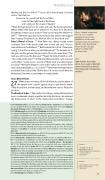
Peter’s denial is depicted here in a 17th-century painting by Gerrit van Hanthorst. At the same moment when Jesus declares that he is the Son of God, Peter, his rst disciple, refuses to admit that
he knows him.
26:69
Judas betrays Jesus; Peter denies Jesus. Judas is lled with remorse and destroys himself. Peter weeps tears of repentance and lives.
Chapter 26
c. [26:64] Ps 110:1; Dn 7:13.
d. [26:67] Wis 2:19; Is 50:6.
e. [26:69–75] Mk 14:66–72; Lk 22:56–62;
Jn 18:17–18, 25–27. f. [26:75] 26:34.
Chapter 27
a. [27:1–2] Mk 15:1; Lk 23:1; Jn 18:28. b. [27:3–10] Acts 1:18–19.
c. [27:3] 26:15.
71
* [26:64] You have said so: see note on Mt 26:25. From now on. . .heaven: the Son of Man who is to be cruci ed (cf. Mt 20:19) will be seen in glorious majesty (cf. Ps 110:1) and coming on the clouds of heaven (cf. Dn 7:13). The Power: see note on Mk 14:61–62.
* [26:65] Blasphemed: the punishment for blasphemy was death by stoning (see Lv 24:10–16). According to the Mishnah, to be guilty of blasphemy one had to pronounce “the Name itself,” i.e., Yahweh; cf. Sanhedrin 7:4, 5. Those who judge the gospel accounts of Jesus’ trial by the later Mishnah standards point out that Jesus uses the surrogate “the Power,” and hence no Jewish court would have regarded him as guilty of blasphemy; others hold that the Mishnah’s narrow understanding of blasphemy was a later development.
* [26:67–68] The physical abuse, apparently done to Jesus by the members of the Sanhedrin themselves, recalls the su erings of the Isaian Servant of the Lord; cf. Is 50:6. The mocking challenge to prophesy is probably motivated by Jesus’ prediction of his future glory (Mt 26:64).
* [26:70] Denied it in front of everyone: see Mt 10:33. Peter’s repentance (Mt 26:75) saves him from the fearful destiny of which Jesus speaks there.
* [26:73] Your speech. . .away: Matthew explicates Mark’s “you too are a Galilean” (Mk 14:70).
* [27:1–31] Cf. Mk 15:1–20. Matthew’s account of the Roman trial before Pilate is introduced by a consultation of the Sanhedrin after which Jesus is handed over to. . .the governor (Mt 27:1–2). Matthew follows his Marcan source closely but adds some material that is peculiar to him, the death of Judas (Mt 27:3–10), possibly the name Jesus as the name of Barabbas also (Mt 27:16–17), the intervention of Pilate’s wife (Mt 27:19), Pilate’s washing his hands in token of his disclaiming responsibility for Jesus’ death (Mt 27:24), and the assuming
of that responsibility by the whole people (Mt 27:25).
* [27:1] There is scholarly disagreement about the meaning of the Sanhedrin’s taking counsel
(symboulion elabon; cf. Mt 12:14; 22:15; 27:7; 28:12); see note on Mk 15:1. Some understand it as a discussion about the strategy for putting their death sentence against Jesus into e ect since they lacked the right to do so themselves. Others see it as the occasion for their passing that sentence, holding that Matthew, unlike Mark (Mk 14:64), does not consider that it had been passed in the night session (Mt 26:66). Even in the latter interpretation, their handing him over to Pilate is best explained on the hypothesis that they did not have competence to put their sentence into e ect, as is stated in Jn 18:31.
* [27:3] The thirty pieces of silver: see Mt 26:15.


