


Page 84 - Demo
P. 84
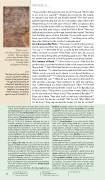
“Pilate’s stone” was discovered in Caesarea in 1961. The inscription proves that Pontius Pilate was indeed Roman governor in Judea under the Emperor Tiberius.
27:14 The silence of Jesus before his accusers recalls the Su ering Servant of the prophet Isaiah: “Though harshly treated, he submitted / and did not open his mouth; / Like a lamb led to slaughter / or a sheep silent before shearers, / he did not open his mouth” (Isaiah 53:7).
MATTHEW
“I have sinned in betraying innocent blood.” They said, “What is that to us? Look to it yourself.” 5* Flinging the money into the temple, he departed and went off and hanged himself. 6The chief priests gathered up the money, but said, “It is not lawful to deposit this in the temple treasury, for it is the price of blood.” 7After consultation, they used it to buy the potter’s field as a burial place for foreigners. 8That is why that field even today is called the Field of Blood. 9Then was fulfilled what had been said through Jeremiah the prophet,* “And they took the thirty pieces of silver, the value of a man with a price on his head, a price set by some of the Israelites, 10d and they paid it out for the potter’s field just as the Lord had commanded me.”
Jesus Questioned by Pilate. 11e Now Jesus stood before the governor, and he questioned him, “Are you the king of the Jews?”* Jesus said, “You say so.” 12f And when he was accused by the chief priests and elders,* he made no answer. 13Then Pilate said to him, “Do you not hear how many things they are testifying against you?” 14But he did not answer him one word, so that the governor was greatly amazed. The Sentence of Death. 15* g Now on the occasion of the feast the governor was accustomed to release to the crowd one prisoner whom they wished. 16* And at that time they had a notorious prisoner called [Jesus] Barabbas. 17So when they had assembled, Pilate said to them, “Which one do you want me to release to you, [Jesus] Barabbas, or Jesus called Messiah?” 18* For he knew that it was out of envy that they had handed him over. 19* While he was still seated on the bench, his wife sent him a message, “Have nothing to do with that righteous man. I suffered much in a dream today because of him.” 20h The chief priests and the elders persuaded the crowds to ask for Barabbas but to destroy Jesus. 21The governor said to them in reply, “Which of the two do you want me to release to you?”They answered,“Barabbas!”22* Pilate said to them, “Then what shall I do with Jesus called Messiah?” They all said, “Let him be crucified!” 23But he said, “Why? What evil has he done?” They only shouted the louder, “Let him be crucified!”
..* [27:5–8] For another tradition about the death of Judas, cf. Acts 1:18–19. The two traditions agree only in the purchase of a eld with the money paid to Judas for his betrayal of Jesus and the name given to the eld, the Field of Blood. In Acts Judas himself buys the eld and its name comes from his own blood shed in his fatal accident on it. The potter’s eld: this designation of the eld is based on the ful llment citation in Mt 27:10.
* [27:9–10] Cf. Mt 26:15. Matthew’s attributing this text to Jeremiah is puzzling, for there is no such text in that book, and the thirty pieces of silver thrown by Judas “into the temple” (Mt 27:5) recall rather Zec 11:12–13. It is usually said that the attribution of the text to Jeremiah is due to Matthew’s combining the Zechariah text with texts from Jeremiah that speak of a potter (Jer 18:2–3), the buying of a eld (Jer 32:6–9), or the breaking of a potter’s ask at Topheth in the valley of Ben- Hinnom with the prediction that it will become a burial place (Jer 19:1–13).
* [27:11] King of the Jews: this title is used of Jesus only by pagans. The Matthean instances are, besides this verse, Mt 2:2; 27:29, 37. Matthew equates it with “Messiah”; cf. Mt 2:2, 4 and Mt 27:17, 22 where he has changed “the king of the Jews” of his Marcan source (Mk 15:9, 12) to “(Jesus) called Messiah.” The normal political connotation of both titles would be of concern to the Roman governor. You say so: see note on Mt 26:25. An unquali ed a rmative response is not made because Jesus’ kingship is not what Pilate would understand it to be.
* [27:12–14] Cf. Mt 26:62–63. As in the trial before the Sanhedrin, Jesus’ silence may be meant to recall Is 53:7. Greatly amazed: possibly an allusion to Is 52:14–15.
* [27:15–26] The choice that Pilate o ers the crowd between
Barabbas and Jesus is said to be in accordance with a custom of releasing at the Passover feast one prisoner chosen by the crowd (Mt 27:15). This custom is mentioned also in Mk 15:6 and Jn 18:39 but not in Luke; see note on Lk 23:17. Outside of the gospels there is no direct attestation of it, and scholars are divided in their judgment of the historical reliability of the claim that there was such a practice.
* [27:16–17] [Jesus] Barabbas: it is possible that the double name is the original reading; Jesus was a common Jewish name; see note on Mt 1:21. This reading is found in only a few textual witnesses, although its absence in the majority can be explained as an omission of Jesus made for reverential reasons. That name is bracketed because of its uncertain textual attestation. The Aramaic name Barabbas means “son of the father”; the irony of the choice o ered between him and Jesus, the true son of the Father, would be evident to those addressees of Matthew who knew that.
* [27:18] Cf. Mk 14:10. This is an example of the tendency, found in varying degree in all the gospels, to present Pilate in a relatively favorable light and emphasize the hostility of the Jewish authorities and eventually of the people.
* [27:19] Jesus’ innocence is declared by a Gentile woman. In a dream: in Matthew’s infancy narrative, dreams are the means of divine communication; cf. Mt 1:20; 2:12, 13, 19, 22.
* [27:22] Let him be cruci ed: incited by the chief priests and elders (Mt 27:20), the crowds demand that Jesus be executed by cruci xion, a peculiarly horrible form of Roman capital punishment. The Marcan parallel, “Crucify him” (Mk 15:3), addressed to Pilate, is changed by Matthew to the passive, probably to emphasize the responsibility of the crowds.
72
d. [27:10] Zec 11:12–13. e. [27:11–14] Mk 15:2–5;
f. [27:12] Is 53:7.
g. [27:15–26] Mk 15:6–15;
h. [27:20] Acts 3:14.
Lk 23:2–3; Jn 18:29–38.
Lk 23:17–25; Jn 18:39–19:16.


