


Page 10 - Earthworks Full Line Catalog 2016
P. 10
Microphone Coverage Area

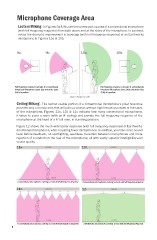
Lectern Miking - In Figures 9a & 9b, see the narrow pick up area of a conventional microphone

(with full frequency response) from both above and at the sides of the microphone. In contrast,
notice the dramatic improvement in coverage (with full frequency response) of an Earthworks
microphone in Figures 10a & 10b.

9a. 9b.                                                                         10a. 10b.

Full frequency response coverage of a Conventional                              Full frequency response coverage of an Earthworks
Directional Microphone above (9a) and at the sides                              Directional Microphone above (10a) and at the sides
(9b) of a podium                                                                (10b) of a podium

                                                    Figures drawn to scale

Ceiling Miking - The narrow usable portion of a conventional microphone’s polar response

provides only a narrow area that will pick up sounds without high frequency losses at the sides
of the microphone. Figures 11a, 11b & 11c indicate how many conventional microphones
it takes to cover a room (with an 8' ceiling) and provide the full frequency response of the
microphone at the head of a 6' tall man, in standing position.

Figure 12 shows the much wider polar response (with full frequency response) of Earthworks
directional microphones, while requiring fewer microphones. In addition, you have more sound
level before feedback, no spotlighting, seamless transition between microphones and more
rejection of sounds from the rear of the microphone, all with vastly superior intelligibility and
sound quality.
11a. 11b.

 2 conventional microphones covering a room with full frequency response 4 conventional microphones covering a room with full frequency response

11c. 12.

       8 conventional microphones covering a room with full frequency response  2 Earthworks microphones covering a room with full frequency response
8

