


Page 110 - 72193
P. 110
114
 ח קרפ
                                              th
 םייח ץפח
 Chafetz Chayim  .).ב"כ( תיִנֲעַתְבּ  הרימשה תבוח סרטנוק  .'וּכְו ןיִזֲחוֹא ןיֵאֶשְׁכּ ןאָכְו ,ןֶהידֵיִבּ  sickened by his troubles).  and work with him to pull him out of his sorrow so that he won’t become   to find, at the very least, a man who will comfort and befriend his son   overwhelmed by sorrow and suffering.  The father
  Kuntres Chovat HaShemirah      הרימשה תבוח סרטנוק
 th
 8  chapter                              ז קרפ
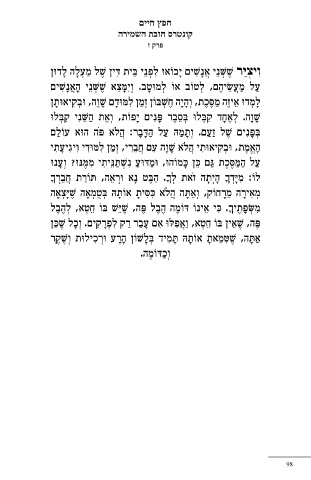
 occasion for a year or two.  But that is not possible regarding    ןוּדָל הָלְעַמ לֶשׁ ןיִדּ תיֵבּ יֵנְפִל וּאוֹבָי םיִשָׁנֲא יֵנְשֶּׁשׁ רַיֻּציִו
 these  commandments  that  are  dependent  on  the  expression  of
 one’s speech.  Even if this person is Gd fearing, as long as he    םיִשָׁנֲאָה יֵנְשֶּׁשׁ אֵצָמִּיְו .בָטוּמְל וֹא בוֹטְל ,םֶהיֵשֲׂעַמ לַע
 does  not  accept  upon  himself  the  obligation  to  discipline  his    ןָתוּאיקְִבוּ ,הֶוָשׁ םָדוּמִּל ןַמְז ןוֹבְּשֶׁח הָיָהְו ,תֶכֶסַּמ הֶזיֵא וּדְמָל
 speech, it is not at all likely that he could save himself from (i.e.,
 avoid) speech that is forbidden even for one week.  (Occasionally    וּלְבּקִ יִנֵשַּׁה תֶאְו ,תוֹפָי םיִנָפּ רֶבֵסְבּ וּלְבּקִ דָחֶאְל .הָוָשׁ
 the speech that leaves this person’s mouth will be haughty or    םַלוֹע אוּה ה ֹּפ אלֲֹה :רָבָדַּה לַע הַּמָתְו .םַעַז לֶשׁ םיִנָפְבּ
 defamatory.  And even if one only has thoughts of haughtiness,
 HaKadosh  Baruch  Hu  views  this  with  great  strictness,  as  the    יִתָעיִגיִו ידִוּמִּל ןַמְז ,ירִֵבֲח םִע הָוָשׁ אלֲֹה יִתוּאיקְִבוּ ,תֶמֱאָה
 pasuk  states  (Mishle  16:5)  “Those  who  have  a  prideful  heart    וּנָעְו ?וּנֶּמִּמ יִתיֵנַּתְּשִׁנ ַעוּדַּמוּ ,וּהוֹמָכּ ןֵכּ םַגּ תֶכֶסַּמַּה לַע
 are despised by Hashem.”  At other times he will speak Lashon
 Hara or Rechilut, and occasionally he will lie or mock others.     ךָרְֵבֲח תרַוֹתּ ,הֵארְוּ אָנ טֶבַּה .ךְָל תאֹז הָתְיָה ךָדְָיִּמ :וֹל
 Occasionally  he  will  use  abusive  language  and  occasionally    הָאְצָיֶּשׁ הָאְמֻטְבּ הָּתוֹא ָתיִסִּכּ אלֲֹה הָתַּאְו ,קוֹחרֵָמ הרָיִאְמ
 speech that embarrasses another person.  Occasionally he will
 use language that is manipulative (flattering an evil person to    לֶבֶהְל ,אְטֵח וֹבּ שֵׁיֶּשׁ ,הֶפּ לֶבֶה הֶמוֹדּ וֹניֵא יִכּ .ךָיֶתָפְשִּׂמ
 receive back a favor from him) and on occasion he will use speech    ןֵכֶּשׁ לָכְו .םיקִרְָפִל קרַ רַבָע םִא וּלִּפֲאַו ,אְטֵח וֹבּ ןיֵאֶשׁ ,הֶפּ
 that invokes Gd’s Name needlessly.  Even saying His Name in
 a language other than Hebrew is a grave sin.  Occasionally he    רקֶֶשְׁו תוּליִכרְוּ ערָָה ןוֹשָׁלְבּ דיִמָתּ הָּתוֹא ָתאֵמִטֶּשׁ ,הָתַּא
 will use speech that expresses anger, which often will result in   .הֶמוֹדַּכְו
 argumentation, verbal abuse and other forbidden things.  All of
 this is alluded to in the statement of the pasuk (Tehilim 49:6) “The
 sins that I trample on with my heel will surround me.”  Because
 of the many ways speech is expressed, one can easily violate
 these speech-dependent commandments).  It would practically
 be a miracle if it happened that one was spared from violating
 these laws for a week, but to avoid committing these sins for a
 month or for a year would be an impossibility.  However, that
 would not be the case if one accepted the responsibility to guard
 one’s speech.  Then most certainly when he says at the end of his
 prayers “my Gd, protect my mouth from (saying anything) bad,”
 he would be making this request wholeheartedly, that Hashem
 Yitbarach should save him from committing sin.  Our Chazal
 have  taught  us  [Gemara  Yomah  38b]  (and  at  the  end  of  the
 Amidah recited daily) that one who tries to purify himself (i.e.,
 to become a better person) will most certainly receive HaKadosh
 Baruch Hu’s assistance not to fall into these sins.


 103                                                                          98

