


Page 106 - 72193
P. 106
110
 .הָאְנִשַּׂה
 ח קרפ
                                              th
 םייח ץפח
 Chafetz Chayim  הרימשה תבוח סרטנוק  ."דֵבַּכֲא ידְַבַּכְמ יִכּ" :)'ל 'ב ,'א   לֵאוּמְשׁ( ביִתְכדְִכוּ .אָבַּבוּ הֶזָבּ וֹדוֹבְכּ לַע אוּה ךְוּרָבּ שׁוֹדָקַּה   וּארְ :וֹרֵבֲחַל דָחֶא רַמאֹּיֶשׁ ,אוּה ךְוּרָבּ שׁוֹדָקַּה לֶשׁ וֹמְשׁ   שֵׁדּקְַתִיְו .לֵארְָשִׂיְבּ תרֶֶאְפִתְלוּ םֵשְׁל וֹמְשׁ הֶיְהִיְו ,תוֹיּרְִבַּה   םִע תַחַנְבּ ו
  Kuntres Chovat HaShemirah      הרימשה תבוח סרטנוק
 th
 8  chapter                              ז קרפ
 High and in the future an accounting and reckoning will have to    ברֹ  וֹל  שֵׁי  םִא  .וֹבּרְֻכּ  ןוֹדִּנ  םָדָא  לָכּ  יִכּ  ,ַעוּדָי  רֶשֲׁאַבּ
 be made for every forbidden word spoken.
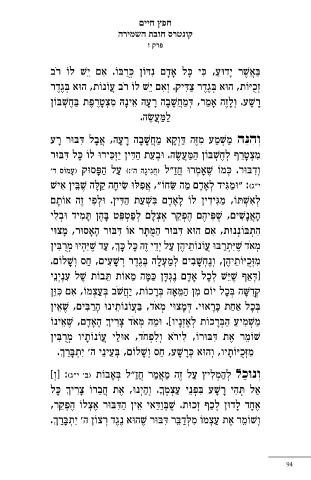
               רדֶֶגְבּ אוּה ,תוֹנוֲֹע ברֹ וֹל שֵׁי םִאְו .קיִדַּצ רדֶֶגְבּ אוּה ,תוֹיֻּכְז
 We know very well the desire of man to (socialize and to) enter
 into a group and become part of it in order that his peers should    ןוֹבְּשֶׁחַבּ תֶפרֶָטְצִמ הָּניֵא הָערָ הָבָשֲׁחַמְדּ ,רַמָא הֶזָלְו .עָשׁרָ
 have a high esteem for him.  But one must know that in the future,    .הֶשֲׂעַמַּל
 at the time when he is judged, all of the men that were part of
 this group (even if they did not participate in the discussion) will    ערָ רוּבִּדּ לָבֲא ,הָערָ הָבָשֲׁחַמ אקְָוַדּ הֶזִּמ עַמְשַׁמ הֵנִּהְו
 have to answer for everything they said.  All of them are recorded
 as participants in an evil group.  This concept is brought down in    רוּבִּדּ לָכּ וֹל וּריִכְּזַי ןיִדַּה תֵעְבוּ .הֶשֲׂעַמַּה ןוֹבְּשֶׁחְל ףרֵָטְצִמ
 Pirkei De’Rebbe Eliezer  in the will of the sage Rebbe Eliezer
 24
 the Great (to his son Hurkanos).  Consequently, how very great is    'ד סוֹמָע( קוּסָפַּה לַע ):'ה הָגיִגֲח( ל"ַזֲח וּרְמָאֶשׁ וֹמְכּ .רוּבּדְִו
 the quality of accepting the obligation to discipline one’s speech,    שׁיִא ןיֵבֶּשׁ הָלּקַ הָחיִשׂ וּלִּפֲא ,"וֹחֵשּׂ הַמ םָדָאְל דיִגַּמוּ" :)ג"י
 that in so doing one will necessarily stay away from the presence
 of such groups of people (as long as he does not know them to    םָתוֹא הֶז יִפְלוּ .ןיִדַּה תַעְשִׁבּ םָדָאָל וֹל ןידִיִגַּמ ,וֹתְּשִׁאְל
 be Gd fearing people who guard themselves against improper    יִלְבוּ דיִמָתּ ןֶהָבּ טֵפְּטַפְל םָלְצֶא רקְֵפֶה םֶהיִפֶּשׁ ,םיִשָׁנֲאָה
 speech) in order that he should not be caught being together with
 them in the future (i.e., on his judgment day).  Please reference    יוּצָמ ,רוּסָאָה רוּבִּדּ וֹא רָתֻּמַּה רוּבִּדּ אוּה םִא ,תוּנְנוֹבְּתִה
 above the words if the Rambam (at the end of the 6th perek)    ןיִבּרְֻמ וּיְהִיֶּשׁ דַע ,ךְָכּ לָכּ הֶז ידְֵי לַע ןֶהיֵתוֹנוֲֹע וּבּרְַתִיֶּשׁ דֹאְמ
 th
 and also Sefer Shemirat HaLashon, in the 14  chapter of Sha’ar
 HaZechirah.   .םוֹלָשְׁו סַח ,םיִעָשׁרְ רדֶֶגְבּ הָלְעַמְל םיִבָשְׁחֶנְו ,ןֶהיֵתוֹיֻּכְזִּמ

 And  all  the  more  so,  by  virtue  of  this  quality  one  will  stay    יֵנְיְנִע לֶשׁ תוֹבֵתּ תוֹאֵמ הָמַּכּ ןָדְּגֶנ םָדָא לָכְל שֵׁיֶּשׁ ףַאְדּ[
 distant  from  argumentation  as  he  recalls  to  himself  that  he  is    ןֵוִּכּ םִא ,וֹמְצַעְבּ בֹשֲׁחַי ,תוֹכרְָבּ הָאֵמַּה ןִמ םוֹי לָכְבּ הָשּׁדֻקְ
 among those who guard themselves (i.e., who have disciplined
 their  speech).    Even  if  he  comes  across  someone  who  insults    ןיֵאֶשׁ ,םיִבּרַָה וּניֵתוֹנוֲֹעַבּ ,דֹאְמ יוּצָמְדּ .יוּארָָכּ תַחַא לָכְבּ
 him, he will keep his mouth closed and not respond back.  In    וֹניֵאֶשׁ ,םָדָאָה ךְירִָצ דֹאְמּ הַמוּ .]ויָנְזָאְל תוֹכרְָבַּה ַעיִמְשַׁמ
 exercising restraint in his speech, his reward will be very great,
 as  Chazal  have  taught  in  Gemara  Chulin  (89a)  “What  is  the    ןיִבּרְֻמ  ויָתוֹנוֲֹע  יַלוּא  ,דֹחְפִלְו  ארֹיִל  ,וֹרוּבִּדּ  תֶא  רֵמוֹשׁ
 explanation of the pasuk (Eyov 26:7) ‘He suspends the world on   .ךְרַָבְּתִי 'ה יֵניֵעְבּ ,םוֹלָשְׁו סַח ,עָשׁרְָכּ אוּהְו ,ויָתוֹיֻּכְזִּמ
 nothingness’? What is the basis for the continued existence of the
 world? [Answer] On (the merit of) those who keep their mouths
 closed  when  confronted  with  argumentation.”    They  (Chazal)   ]ְו[ :)ג"י 'ב( תוֹבָאְבּ ל"ַזֲח רַמֲאַמ הֶז לַע ץיִלְמַהְל לַכוּנְו
 have further said (Gemara Shabbat 88a, Yomah 23b, Gittin 37b)    לָכּ ךְירִָצ וֹרֵבֲח תֶא ,וּנְיַהְו .ךְָמְצַע יֵנְפִבּ עָשׁרָ יִהְתּ לַא
 “Those  who  are  embarrassed  and  don’t  respond,  who  absorb
               ,רקְֵפֶה וֹלְצֶא רוּבִּדַּה ןיֵא יאַדַּוְבֶּשׁ .תוּכְז ףַכְל ןוּדָל דָחֶא

 24.  See Sefer Chafetz Chayim, 6th Kelal, 6th halacha.   .ךְרַָבְּתִי 'ה ןוֹצרְ דֶגֶנ אוּהֶשׁ רוּבִּדּ רֵבּדְַלִּמ וֹמְצַע תֶא רֵמוֹשְׁו


 107                                                                          94

