


Page 77 - Handout Digital Electronics
P. 77
9.4 Comparators
            A  comparator  is  a  logic  circuit  used  to  compare  two  binary  numbers.  There  are  two  types  of
            comparators:

               •  Comparator for equality
               •  Full comparator

            A comparator for equality has n inputs and one output and a Full comparator has n inputs and three (3)
            outputs. But both comparators can compare a maximum of two binary numbers at a time. For example,
            given two n – bit magnitude binary numbers A and B a comparator for equality will indicate that either
            the two binary numbers are  equal in which case output F=1 or the two binary numbers are not equal in
            which case F= 0. Using the same binary numbers a full comparator will indicate whether:

               •  A>B or
               •  A<B or
               •  A = B

            9.5 Comparator for equality
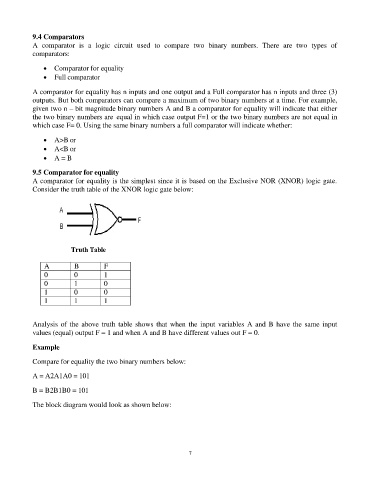
            A comparator for equality is the simplest since it is based on the Exclusive NOR (XNOR) logic gate.
            Consider the truth table of the XNOR logic gate below:


                         Truth Table

                A         B        F
                0         0        1
                0         1        0
                1         0        0
                1         1        1


            Analysis of the  above truth  table shows that when the input variables A and B have the same input
            values (equal) output F = 1 and when A and B have different values out F = 0.

            Example

            Compare for equality the two binary numbers below:

            A = A2A1A0 = 101

            B = B2B1B0 = 101

            The block diagram would look as shown below:


                                                                77

