


Page 124 - Pharmd general phytochemistry I-Final2024_LEUCTERS
P. 124
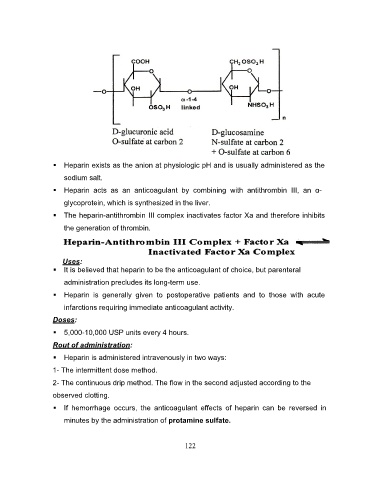
Heparin exists as the anion at physiologic pH and is usually administered as the
sodium salt.
Heparin acts as an anticoagulant by combining with antithrombin III, an α-
glycoprotein, which is synthesized in the liver.
The heparin-antithrombin III complex inactivates factor Xa and therefore inhibits
the generation of thrombin.
Uses:
It is believed that heparin to be the anticoagulant of choice, but parenteral
administration precludes its long-term use.
Heparin is generally given to postoperative patients and to those with acute
infarctions requiring immediate anticoagulant activity.
Doses:
5,000-10,000 USP units every 4 hours.
Rout of administration:
Heparin is administered intravenously in two ways:
1- The intermittent dose method.
2- The continuous drip method. The flow in the second adjusted according to the
observed clotting.
If hemorrhage occurs, the anticoagulant effects of heparin can be reversed in
minutes by the administration of protamine sulfate.
122

