


Page 69 - UNI 101 Computer Science Handout.
P. 69
Faculty of Nursing
                                                                  Adult care Nursing Department


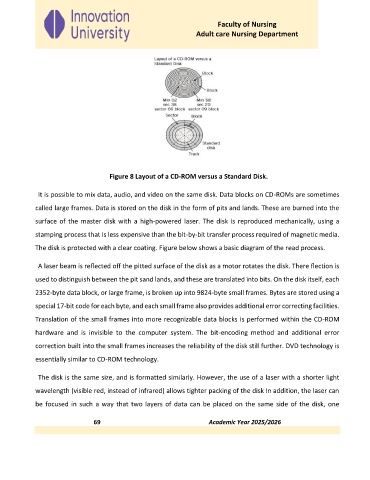
                                     Figure 8 Layout of a CD-ROM versus a Standard Disk.


              It is possible to mix data, audio, and video on the same disk. Data blocks on CD-ROMs are sometimes
             called large frames. Data is stored on the disk in the form of pits and lands. These are burned into the

             surface of the master disk with a high-powered laser. The disk is reproduced mechanically, using a

             stamping process that is less expensive than the bit-by-bit transfer process required of magnetic media.
             The disk is protected with a clear coating. Figure below shows a basic diagram of the read process.


              A laser beam is reflected off the pitted surface of the disk as a motor rotates the disk. There flection is

             used to distinguish between the pit sand lands, and these are translated into bits. On the disk itself, each

             2352-byte data block, or large frame, is broken up into 9824-byte small frames. Bytes are stored using a
             special 17-bit code for each byte, and each small frame also provides additional error correcting facilities.

             Translation of the small frames into more recognizable data blocks is performed within the CD-ROM

             hardware  and  is  invisible  to  the  computer  system.  The  bit-encoding  method  and  additional  error

             correction built into the small frames increases the reliability of the disk still further. DVD technology is
             essentially similar to CD-ROM technology.


              The disk is the same size, and is formatted similarly. However, the use of a laser with a shorter light

             wavelength (visible red, instead of infrared) allows tighter packing of the disk In addition, the laser can

             be focused in such a way that two layers of data can be placed on the same side of the disk, one

                                69                                                                        Academic Year 2025/2026

