


Page 109 - Handout Computer Network.
P. 109
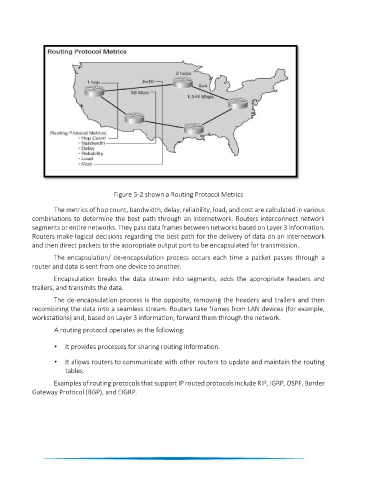
Figure 5-2 shown a Routing Protocol Metrics

                   The metrics of hop count, bandwidth, delay, reliability, load, and cost are calculated in various
            combinations to determine the best path through an internetwork. Routers interconnect network
            segments or entire networks. They pass data frames between networks based on Layer 3 information.
            Routers make logical decisions regarding the best path for the delivery of data on an internetwork
            and then direct packets to the appropriate output port to be encapsulated for transmission.
                   The encapsulation/ de-encapsulation process occurs each time a packet passes through a
            router and data is sent from one device to another.

                   Encapsulation  breaks  the  data  stream  into  segments,  adds  the  appropriate  headers  and
            trailers, and transmits the data.
                   The de-encapsulation process is the opposite, removing the headers and trailers and then
            recombining the data into a seamless stream. Routers take frames from LAN devices (for example,
            workstations) and, based on Layer 3 information, forward them through the network.
                   A routing protocol operates as the following:


                   •  It provides processes for sharing routing information.

                   •  It allows routers to communicate with other routers to update and maintain the routing
                       tables.
                   Examples of routing protocols that support IP routed protocols include RIP, IGRP, OSPF, Border
            Gateway Protocol (BGP), and EIGRP.

