


Page 123 - Handout Computer Network.
P. 123
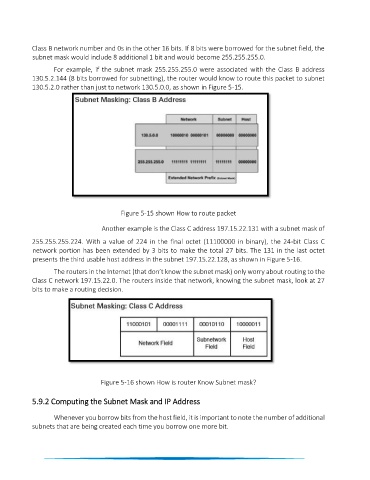
Class B network number and 0s in the other 16 bits. If 8 bits were borrowed for the subnet field, the
            subnet mask would include 8 additional 1 bit and would become 255.255.255.0.

                   For example, if the subnet mask 255.255.255.0 were associated with the Class B address
            130.5.2.144 (8 bits borrowed for subnetting), the router would know to route this packet to subnet
            130.5.2.0 rather than just to network 130.5.0.0, as shown in Figure 5-15.


                                         Figure 5-15 shown How to route packet

                                   Another example is the Class C address 197.15.22.131 with a subnet mask of

            255.255.255.224.  With a  value  of  224  in  the  final  octet  (11100000  in binary),  the 24-bit  Class  C
            network portion has been extended by 3 bits to make the total 27 bits. The 131 in the last octet
            presents the third usable host address in the subnet 197.15.22.128, as shown in Figure 5-16.
                   The routers in the Internet (that don’t know the subnet mask) only worry about routing to the
            Class C network 197.15.22.0. The routers inside that network, knowing the subnet mask, look at 27
            bits to make a routing decision.


                                  Figure 5-16 shown How is router Know Subnet mask?


            5.9.2 Computing the Subnet Mask and IP Address


                   Whenever you borrow bits from the host field, it is important to note the number of additional
            subnets that are being created each time you borrow one more bit.

