


Page 98 - M. Abrahim Thesis
P. 98
Chapter (4) Network Design


            this destination address, the data is processed by every computer. To ensure that all the other
            devices on the network process the broadcast, the sender must use a destination IP address that
            they can recognize and process. Broadcast IP addresses end with binary 1s in the entire host part of
            the address (the Host field).


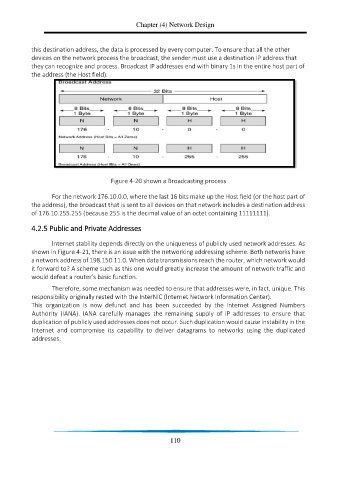
                                        Figure 4-20 shown a Broadcasting process

                   For the network 176.10.0.0, where the last 16 bits make up the Host field (or the host part of
            the address), the broadcast that is sent to all devices on that network includes a destination address
            of 176.10.255.255 (because 255 is the decimal value of an octet containing 11111111).

            4.2.5 Public and Private Addresses


                   Internet stability depends directly on the uniqueness of publicly used network addresses. As
            shown in Figure 4-21, there is an issue with the networking addressing scheme. Both networks have
            a network address of 198.150.11.0. When data transmissions reach the router, which network would
            it forward to? A scheme such as this one would greatly increase the amount of network traffic and
            would defeat a router’s basic function.

                   Therefore, some mechanism was needed to ensure that addresses were, in fact, unique. This
            responsibility originally rested with the InterNIC (Internet Network Information Center).
            This  organization  is  now  defunct  and  has  been  succeeded  by  the  Internet  Assigned  Numbers
            Authority  (IANA).  IANA  carefully  manages  the  remaining  supply  of  IP  addresses  to  ensure  that
            duplication of publicly used addresses does not occur. Such duplication would cause instability in the
            Internet  and  compromise  its  capability  to  deliver  datagrams  to  networks  using  the  duplicated
            addresses.


                                                             110

