


Page 99 - M. Abrahim Thesis
P. 99
Computer Network                                                             2021


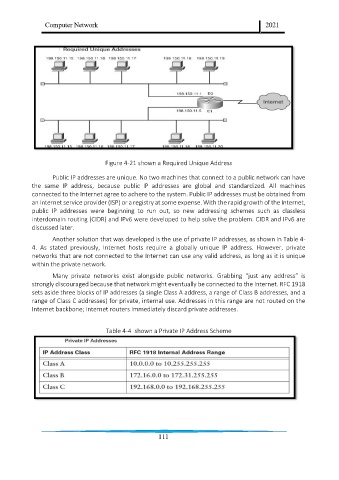
                                      Figure 4-21 shown a Required Unique Address

                   Public IP addresses are unique. No two machines that connect to a public network can have
            the  same  IP  address,  because  public  IP  addresses  are  global  and  standardized.  All  machines
            connected to the Internet agree to adhere to the system. Public IP addresses must be obtained from
            an Internet service provider (ISP) or a registry at some expense. With the rapid growth of the Internet,
            public  IP  addresses  were  beginning  to  run  out,  so  new  addressing  schemes  such  as  classless
            interdomain routing (CIDR) and IPv6 were developed to help solve the problem. CIDR and IPv6 are
            discussed later.

                   Another solution that was developed is the use of private IP addresses, as shown in Table 4-
            4.  As  stated  previously,  Internet  hosts  require  a  globally  unique  IP  address.  However,  private
            networks that are not connected to the Internet can use any valid address, as long as it is unique
            within the private network.

                   Many  private  networks  exist  alongside  public  networks.  Grabbing  “just  any  address”  is
            strongly discouraged because that network might eventually be connected to the Internet. RFC 1918
            sets aside three blocks of IP addresses (a single Class A address, a range of Class B addresses, and a
            range of Class C addresses) for private, internal use. Addresses in this range are not routed on the
            Internet backbone; Internet routers immediately discard private addresses.


                                      Table 4-4  shown a Private IP Address Scheme


                                                         111

