


Page 97 - M. Abrahim Thesis
P. 97
Computer Network                                                             2021


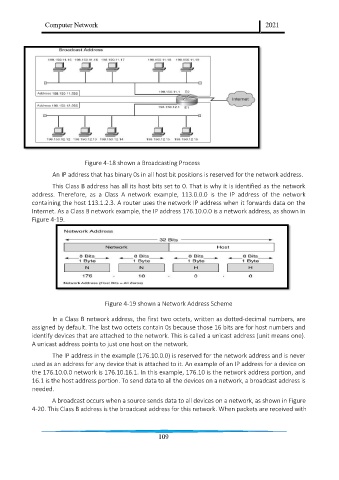
                               Figure 4-18 shown a Broadcasting Process

                   An IP address that has binary 0s in all host bit positions is reserved for the network address.
                   This Class B address has all its host bits set to 0. That is why it is identified as the network
            address.  Therefore,  as  a  Class  A  network  example,  113.0.0.0  is  the  IP  address  of  the  network
            containing the host 113.1.2.3. A router uses the network IP address when it forwards data on the
            Internet. As a Class B network example, the IP address 176.10.0.0 is a network address, as shown in
            Figure 4-19.


                                      Figure 4-19 shown a Network Address Scheme

                   In a Class B network address, the first two octets, written as dotted-decimal numbers, are
            assigned by default. The last two octets contain 0s because those 16 bits are for host numbers and
            identify devices that are attached to the network. This is called a unicast address (unit means one).
            A unicast address points to just one host on the network.
                   The IP address in the example (176.10.0.0) is reserved for the network address and is never
            used as an address for any device that is attached to it. An example of an IP address for a device on
            the 176.10.0.0 network is 176.10.16.1. In this example, 176.10 is the network address portion, and
            16.1 is the host address portion. To send data to all the devices on a network, a broadcast address is
            needed.
                   A broadcast occurs when a source sends data to all devices on a network, as shown in Figure
            4-20. This Class B address is the broadcast address for this network. When packets are received with


                                                         109

