


Page 32 - demo
P. 32
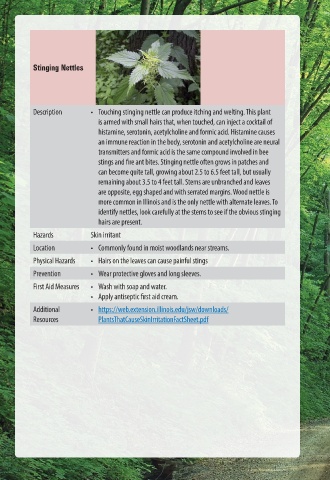
Stinging Nettles


         Description   •  Touching stinging nettle can produce itching and welting. This plant
                         is armed with small hairs that, when touched, can inject a cocktail of
                         histamine, serotonin, acetylcholine and formic acid. Histamine causes
                         an immune reaction in the body, serotonin and acetylcholine are neural
                         transmitters and formic acid is the same compound involved in bee
                         stings and fire ant bites. Stinging nettle often grows in patches and
                         can become quite tall, growing about 2.5 to 6.5 feet tall, but usually
                         remaining about 3.5 to 4 feet tall. Stems are unbranched and leaves
                         are opposite, egg shaped and with serrated margins. Wood nettle is
                         more common in Illinois and is the only nettle with alternate leaves. To
                         identify nettles, look carefully at the stems to see if the obvious stinging
                         hairs are present.
         Hazards       Skin irritant
         Location      •  Commonly found in moist woodlands near streams.
         Physical Hazards  •  Hairs on the leaves can cause painful stings
         Prevention    •  Wear protective gloves and long sleeves.
         First Aid Measures  •  Wash with soap and water.
                       •  Apply antiseptic first aid cream.
         Additional    •  https://web.extension.illinois.edu/jsw/downloads/
         Resources       PlantsThatCauseSkinIrritationFactSheet.pdf

