


Page 27 - demo
P. 27
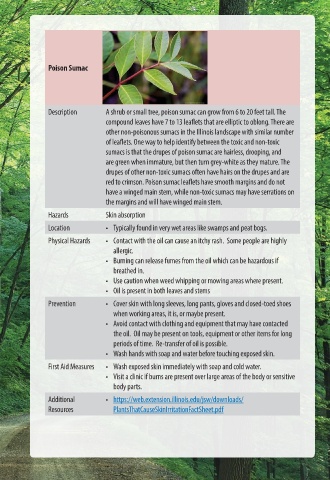
Poison Sumac


             Description  A shrub or small tree, poison sumac can grow from 6 to 20 feet tall. The
                          compound leaves have 7 to 13 leaflets that are elliptic to oblong. There are
                          other non-poisonous sumacs in the Illinois landscape with similar number
                          of leaflets. One way to help identify between the toxic and non-toxic
                          sumacs is that the drupes of poison sumac are hairless, drooping, and
                          are green when immature, but then turn grey-white as they mature. The
                          drupes of other non-toxic sumacs often have hairs on the drupes and are
                          red to crimson. Poison sumac leaflets have smooth margins and do not
                          have a winged main stem, while non-toxic sumacs may have serrations on
                          the margins and will have winged main stem.
             Hazards      Skin absorption
             Location     •  Typically found in very wet areas like swamps and peat bogs.
             Physical Hazards  •  Contact with the oil can cause an itchy rash.  Some people are highly
                            allergic.
                          •  Burning can release fumes from the oil which can be hazardous if
                            breathed in.
                          •  Use caution when weed whipping or mowing areas where present.
                          •  Oil is present in both leaves and stems
             Prevention   •  Cover skin with long sleeves, long pants, gloves and closed-toed shoes
                            when working areas, it is, or maybe present.
                          •  Avoid contact with clothing and equipment that may have contacted
                            the oil.  Oil may be present on tools, equipment or other items for long
                            periods of time.  Re-transfer of oil is possible.
                          •  Wash hands with soap and water before touching exposed skin.
             First Aid Measures  •  Wash exposed skin immediately with soap and cold water.
                          •  Visit a clinic if burns are present over large areas of the body or sensitive
                            body parts.
             Additional    •  https://web.extension.illinois.edu/jsw/downloads/
             Resources      PlantsThatCauseSkinIrritationFactSheet.pdf

