


Page 20 - 2026_AMIkids 2025 Annual Impact Report
P. 20
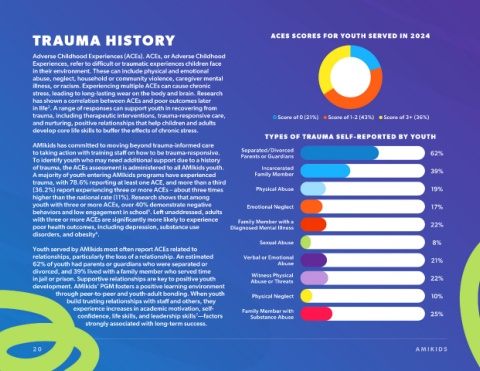
TRAUMA HISTORY                                                                ACES SCORES FOR YOUTH SERVED IN 2024


            Adverse Childhood Experiences (ACEs). ACEs, or Adverse Childhood
            Experiences, refer to difficult or traumatic experiences children face
            in their environment. These can include physical and emotional
            abuse, neglect, household or community violence, caregiver mental
            illness, or racism. Experiencing multiple ACEs can cause chronic
            stress, leading to long-lasting wear on the body and brain. Research
            has shown a correlation between ACEs and poor outcomes later
            in life . A range of responses can support youth in recovering from
                 2
            trauma, including therapeutic interventions, trauma-responsive care,             Score of 0 (21%)      Score of 1-2 (43%)      Score of 3+ (36%)
            and nurturing, positive relationships that help children and adults
            develop core life skills to buffer the effects of chronic stress.
                                                                                        TYPES OF TRAUMA SELF-REPORTED BY YOUTH
            AMIkids has committed to moving beyond trauma-informed care
            to taking action with training staff on how to be trauma-responsive.   Separated/Divorced                                          62%
                                                                                 Parents or Guardians
            To identify youth who may need additional support due to a history
            of trauma, the ACEs assessment is administered to all AMIkids youth.       Incarcerated                                            39%
            A majority of youth entering AMIkids programs have experienced           Family Member
            trauma, with 78.6% reporting at least one ACE, and more than a third
            (36.2%) report experiencing three or more ACEs – about three times        Physical Abuse                                           19%
            higher than the national rate (11%). Research shows that among
            youth with three or more ACEs, over 40% demonstrate negative           Emotional Neglect                                           17%
            behaviors and low engagement in school . Left unaddressed, adults
                                                  5
            with three or more ACEs are significantly more likely to experience   Family Member with a
            poor health outcomes, including depression, substance use        Diagnosed Mental Illness                                          22%
            disorders, and obesity .
                                 6
                                                                                       Sexual Abuse                                             8%
            Youth served by AMIkids most often report ACEs related to
            relationships, particularly the loss of a relationship. An estimated   Verbal or Emotional                                         21%
            62% of youth had parents or guardians who were separated or                      Abuse
            divorced, and 39% lived with a family member who served time
                                                                                    Witness Physical
            in jail or prison. Supportive relationships are key to positive youth   Abuse or Threats                                           22%
            development. AMIkids’ PGM fosters a positive learning environment
                   through peer-to-peer and youth-adult bonding. When youth         Physical Neglect                                           10%
                       build trusting relationships with staff and others, they
                         experience increases in academic motivation, self-      Family Member with
                           confidence, life skills, and leadership skills —factors   Substance Abuse                                           25%
                                                                  7
                             strongly associated with long-term success.


            20                                                                                                                            AMIKID S                        2025 ANNU AL IMP A C T REP ORT                                                                                                        21

