


Page 312 - American Stories, A History of the United States
P. 312
and school officials could mold children like clay to a state of perfection. Like advocates
                    of childrearing through moral influence rather than physical force, he discouraged                     12.1
                    corporal punishment except as a last resort. His position on this issue led to a bitter
                    controversy with Boston schoolmasters who retained a Calvinist sense of original sin
                    and favored a freer use of the rod.                                                                    12.2
                       Against those who argued that school taxes violated property rights, Mann contended
                    that private property was actually held in trust for the good of the community: “The prop-
                    erty of this commonwealth is pledged for the education of all its youth up to such a point             12.3
                    as will save them from poverty and vice, and prepare them for the adequate performance
                    of their social and civil duties.” Mann’s conception of public education as a means of social
                    discipline converted the middle and upper classes to the cause. By teaching middle-class
                    morality and respect for order, the schools could turn potential rowdies and revolution-
                    aries into law-abiding citizens. Schools could also encourage social mobility by opening
                    doors for lower-class children who were determined to do better than their parents.


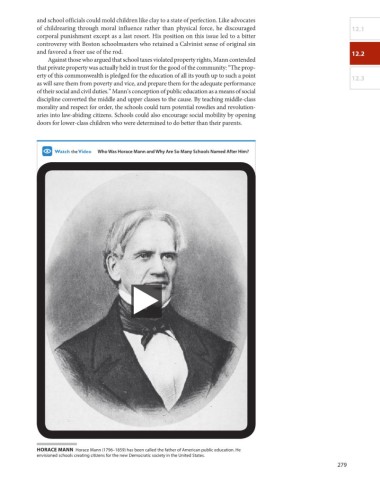
                         Watch the Video   Who Was horace Mann and Why Are So Many Schools named After him?


                    hoRaCe Mann  Horace Mann (1796–1859) has been called the father of American public education. He
                    envisioned schools creating citizens for the new Democratic society in the United states.
                                                                                                                       279

