


Page 316 - American Stories, A History of the United States
P. 316
1829. Walker denounced slavery in the most vigorous language and called for a black
                    revolt against white tyranny.                                                                          12.1
                       Free blacks in the North were also the main conductors on the fabled Under-
                    ground Railroad, which opened a path for fugitives from slavery. Ex-slaves such as
                    Harriet Tubman and Josiah Henson made regular forays into the slave states to lead                     12.2
                    other blacks to freedom, and free blacks ran many of the “stations” along the way.
                    In northern towns and cities, free blacks organized “vigilance committees” to protect
                    fugitives and thwart the slave-catchers. Blacks even used force to rescue recaptured                   12.3
                    fugitives from the authorities. In Boston in 1851, one such group seized a slave named
                    Shadrack from a U.S. marshal who was returning him to bondage. In deeds and words,
                    free blacks showed unyielding hostility to slavery and racism.
                       Historians have debated whether the abolitionist movement of the 1830s and early
                    1840s was a failure. It failed to convince most Americans that slavery was a sinful institution
                    that should be abolished immediately. This position, which implied that blacks should be
                    granted equality as American citizens, ran up against a commitment to white supremacy in
                    all parts of the country. In the South, abolitionism helped inspire a more militant defense
                    of slavery. The belief that peaceful agitation, or what abolitionists called “moral suasion,”
                    would convert slaveholders and their northern sympathizers to abolition was unrealistic.


                                Read the Document   David Walker, A Black Abolitionist Speaks out (1829)


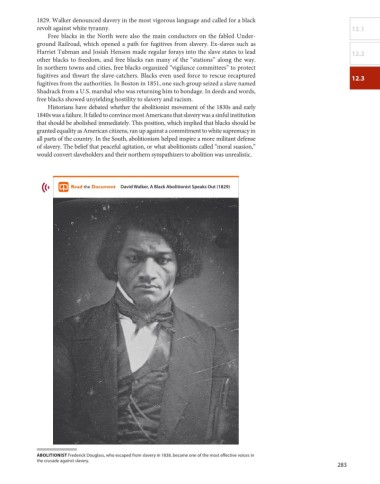
                    aboliTioniST Frederick Douglass, who escaped from slavery in 1838, became one of the most effective voices in
                    the crusade against slavery.
                                                                                                                       283

