


Page 134 - Handout of Computer Architecture (1)..
P. 134
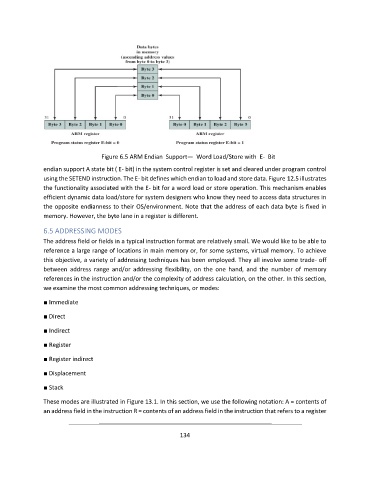
Figure 6.5 ARM Endian  Support—  Word Load/Store with  E-  Bit
               endian support A state bit ( E- bit) in the system control register is set and cleared under program control
               using the SETEND instruction. The E- bit defines which endian to load and store data. Figure 12.5 illustrates
               the functionality associated with the E- bit for a word load or store operation. This mechanism enables
               efficient dynamic data load/store for system designers who know they need to access data structures in
               the opposite endianness to their OS/environment. Note that the address of each data byte is fixed in
               memory. However, the byte lane in a register is different.

               6.5 ADDRESSING MODES
               The address field or fields in a typical instruction format are relatively small. We would like to be able to
               reference a large range of locations in main memory or, for some systems, virtual memory. To achieve
               this objective, a variety of addressing techniques has been employed. They all involve some trade- off
               between  address  range  and/or  addressing  flexibility,  on  the  one  hand,  and  the  number  of  memory
               references in the instruction and/or the complexity of address calculation, on the other. In this section,
               we examine the most common addressing techniques, or modes:

               ■ Immediate

               ■ Direct

               ■ Indirect
               ■ Register

               ■ Register indirect

               ■ Displacement

               ■ Stack

               These modes are illustrated in Figure 13.1. In this section, we use the following notation: A = contents of
               an address field in the instruction R = contents of an address field in the instruction that refers to a register


                                                             134

