


Page 48 - Handout of Computer Architecture (1)..
P. 48
approach in essence allows multiple pipelines within a single processor, so that instructions that
               do not depend on one another can be executed in parallel.

               By the mid to late 90s, both of these approaches were reaching a point of diminishing returns.

               The  internal  organization  of  contemporary  processors  is  exceedingly  complex  and  is  able  to
               squeeze a great deal of parallelism out of the instruction stream. It seems likely that further
               significant increases in this direction will be relatively modest [GIBB04]. With three levels of cache
               on the processor chip, each level providing substantial capacity, it also seems that the benefits
               from the cache are reaching a limit.

               However, simply relying on increasing clock rate for increased performance runs into the power
               dissipation problem already referred to. The faster the clock rate, the greater the amount of
               power to be dissipated, and some fundamental physical limits are being reached.


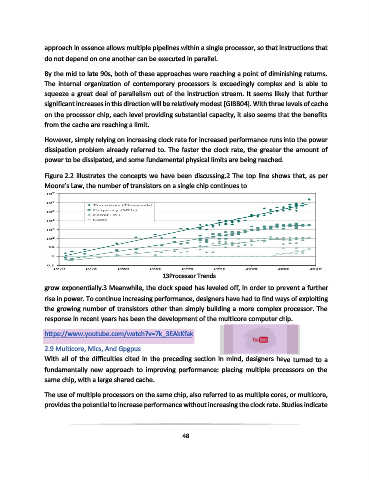
               Figure 2.2 illustrates the concepts we have been discussing.2 The top line shows that, as per
               Moore’s Law, the number of transistors on a single chip continues to


                                                       13Processor Trends

               grow exponentially.3 Meanwhile, the clock speed has leveled off, in order to prevent a further
               rise in power. To continue increasing performance, designers have had to find ways of exploiting
               the growing number of transistors other than simply building a more complex processor. The
               response in recent years has been the development of the multicore computer chip.

               https://www.youtube.com/watch?v=7k_3EAkKfak

               2.9 Multicore, Mics, And Gpgpus
               With all of the difficulties cited in the preceding section in mind, designers have turned to a

               fundamentally  new  approach  to  improving  performance:  placing  multiple  processors  on  the
               same chip, with a large shared cache.

               The use of multiple processors on the same chip, also referred to as multiple cores, or multicore,
               provides the potential to increase performance without increasing the clock rate. Studies indicate


                                                             48

