


Page 71 - Handout of Computer Architecture (1)..
P. 71
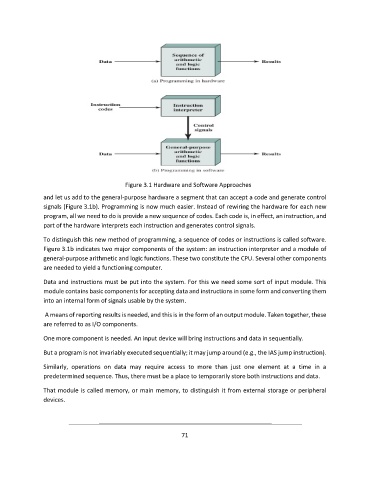
Figure 3.1 Hardware and Software Approaches
               and let us add to the general-purpose hardware a segment that can accept a code and generate control
               signals (Figure 3.1b). Programming is now much easier. Instead of rewiring the hardware for each new
               program, all we need to do is provide a new sequence of codes. Each code is, in effect, an instruction, and
               part of the hardware interprets each instruction and generates control signals.

               To distinguish this new method of programming, a sequence of codes or instructions is called software.
               Figure 3.1b indicates two major components of the system: an instruction interpreter and a module of
               general-purpose arithmetic and logic functions. These two constitute the CPU. Several other components
               are needed to yield a functioning computer.

               Data and instructions must be put into the system. For this we need some sort of input module. This
               module contains basic components for accepting data and instructions in some form and converting them
               into an internal form of signals usable by the system.

                A means of reporting results is needed, and this is in the form of an output module. Taken together, these
               are referred to as I/O components.

               One more component is needed. An input device will bring instructions and data in sequentially.

               But a program is not invariably executed sequentially; it may jump around (e.g., the IAS jump instruction).

               Similarly,  operations  on  data  may  require  access  to  more  than  just  one  element  at  a  time  in  a
               predetermined sequence. Thus, there must be a place to temporarily store both instructions and data.

               That module is called memory, or main memory, to distinguish it from external storage or peripheral
               devices.


                                                             71

