


Page 177 - 72193
P. 177
180
                                             די קרפ
                                                                                                                                  th
                                               םייח ץפח
                                   Chafetz Chayim    הרימשה תבוח סרטנוק  .םיִנָפּ תַנָבְּלַהְו ערָָה ןוֹשָׁלְו  .ערָָה רֶצֵי הֶז ,רֵמוֹא יֵוֲה ?םָדָא לֶשׁ וֹפוּגְבּ שֵׁיֶּשׁ  ]ַמּ[ַה לָכְו ,ירְֵמַגְל תוְֹצִמַּהְו הרָוֹתַּה םָדָאָה לֶצֵא זָא וּרקְְפֻהֶשׁ   ןיקְִסוֹפּ וּלִּפֲא ,סֵעוֹכֶּשׁ םָדָא לָכּ :):ו"ס םיִחָסְפּ( ל"ַזֲח וּרְמָא
                              Kuntres Chovat HaShemirah                                                              הרימשה תבוח סרטנוק
                                      13  chapter                                                                           גי קרפ
                                        th


                   Chafetz Chayim              Chovat HaShemirah                                                          ג"י קרֶֶפּ

                                   13 chapter                                                                        הרָוֹתַּה תקַָזְחַהְל זוּרֵז
                                      th

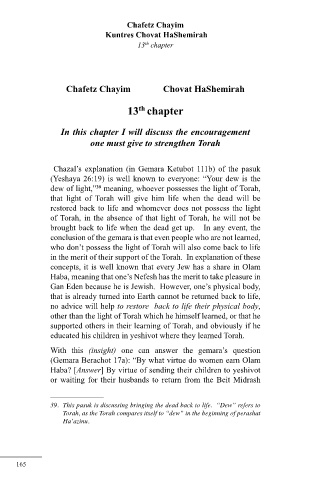
                 In this chapter I will discuss the encouragement
                         one must give to strengthen Torah                                         לַע  ):א"יק  תוֹבֻּתְכּ(  ל"ַזֲח  וּרְמָאֶשּׁ  הַמ  ,ל ֹּכַל  ַעוּדָי  הֵנִּה

                                                                                                   וֹדָיְבּ שֵׁיֶּשׁ יִמ לָכּ ,"ךֶָלַּט תרֹוֹא לַט" :)ט"י ו"כ הָיְעַשְׁי( קוּסָפַּה
                Chazal’s explanation (in Gemara Ketubot 111b) of the pasuk                         יִמ לָכְו ,]םיִתֵמַּה תַיִּחְתִל[ וּהֵיַּחְמ הרָוֹתּ רוֹא ,הרָוֹתּ רוֹא
               (Yeshaya 26:19) is well known to everyone: “Your dew is the
               dew of light,”  meaning, whoever possesses the light of Torah,                      םוֹקָמ לָכִּמוּ .וּהֵיַּחְמ הרָוֹתּ רוֹא ןיֵא ,הרָוֹתּ רוֹא וֹדָיְבּ ןיֵאֶשׁ
                           39
               that  light  of  Torah  will  give  him  life  when  the  dead  will  be            םַגּ ,הרָוֹתּ רוֹא םֶהָבּ ןיֵאֶשׁ ,ץרֶָאָה יֵמַּע וּלִּפֲאַדּ ,םָשׁ ןַניקְִסָמ
               restored back to life and whomever does not possess the light
               of Torah, in the absence of that light of Torah, he will not be                     ,םירִָבְדַּה רוּאֵבוּ .הרָוֹתַּה תקַָזְחַה תוּכְזִבּ הָיִּחְתִל וּדְמַעַי ןֵכּ
               brought back to life when the dead get up.   In any event, the
               conclusion of the gemara is that even people who are not learned,                   וּנְיַה ,אָבַּה םָלוֹעָל קֶלֵח םֶהָל שֵׁי לֵארְָשִׂי לָכֶּשׁ ,ַעוּדָיְדּ ףַא
               who don’t possess the light of Torah will also come back to life                    שׁיִא אוּהֶשׁ רוּבֲעַבּ ןדֵֶע ןַגְבּ ןֵדַּעְתִהְל תוּכְז הָּל שֵׁי שֶׁפֶנַּהֶשׁ
               in the merit of their support of the Torah.  In explanation of these
               concepts, it is well known that every Jew has a share in Olam                       ,הָיִּחְתִל וֹמיקֲִהַל ,רָפָע רָבְכּ הָשֲׂעַנֶּשׁ ףוּגַּה לָבֲא .לֵארְָשִׂי
               Haba, meaning that one’s Nefesh has the merit to take pleasure in                   ,וֹמְצַעְבּ דַמָלֶּשׁ הרָוֹתַּה רוֹא יִתְּלִבּ ,הָצֵע םוּשׁ תֶלֶעוֹמ ןיֵא
               Gan Eden because he is Jewish.  However, one’s physical body,
               that is already turned into Earth cannot be returned back to life,                  ויָנָבּ ןַתָנֶּשְׁכּ ןֵכֶּשׁ לָכְו ,םירִֵחֲאַל וּלִּפֲא הרָוֹתּ קיִזֱחֶהֶשׁ וֹא
               no advice will help to restore  back to life their physical body,                                  .הרָוֹתּ דֹמְלִל רֶפֵסַּה תיֵבְל
               other than the light of Torah which he himself learned, or that he
               supported others in their learning of Torah, and obviously if he                    םיִשָׁנ :).ז"י תוֹכרְָבּ( ארָָמְגַּה הרְָמָאְדּ יאַמ םיִצרְָתְמ הֶזָבוּ
               educated his children in yeshivot where they learned Torah.
                                                                                                   תַארָקְַהְבּ ?תוֹכוֹז הֶמַּבּ םיִשָׁנ( וּהְיַנְבּ יֵיוּרקְַאְבּ ?ןָיְכָז יאַמְבּ
               With  this  (insight)  one  can  answer  the  gemara’s  question
               (Gemara Berachot 17a): “By what virtue do women earn Olam                           יֵבִּמ  וּתָאְדּ  דַע  ,ןֶהיֵלְעַבְל  ןיִניִתְּמַמֶּשׁ  הֶמַּבּ  וֹא  ,)ןֶהיֵנְבּ
               Haba? [Answer] By virtue of sending their children to yeshivot                      שֵׁי אלֲֹה ,הרָוֹאְכִלְו .)תֶסֶנְכַּה תיֵבִּמ םיִאָבֶּשׁ דַע( אָתְּשׁיִנְכ
               or waiting for their husbands to return from the Beit Midrash
                                                                                                   הרָוֹתּ דוּמְלַתּ דַבְלִּמ ,םיִשָׁנֲא וֹמְכּ הרָוֹתַּה תוְֹצִמ לָכּ ןֶהָל


               39.  This pasuk is discussing bringing the dead back to life.  “Dew” refers to      וּנְבַתָכֶּשׁ  הֶמַּבּ  לָבֲא  ?אָמרְָגּ  ןַמְזַּהֶשׁ  הֵשֲׂע  תוְֹצִמ  הָמַּכְו
                  Torah, as the Torah compares itself to “dew” in the beginning of perashat
                  Ha’azinu.                                                                        ןָשְׁפַנְל  הֶיְהִי  יאַדַּוְבּ  אָבַּה  םָלוֹעֶשׁ  תֶמֱא  .אָחיִנ  ,הָלְעַמְל


     165                                                                                                                                                          164

