


Page 40 - 72193
P. 40
44
 ב קרפ
 םייח ץפח
 Chafetz Chayim  הרימשה תבוח סרטנוק  tunic’s skirt.  for-measure, that you (first) used the word ‘they’ decisively.  end? – Decisively).  Thus HaKadosh Baruch Hu replied- This is measure-  your G-d...” and You answered me back with ‘they’ (to inform me of my   But I used the word ‘they’ to praise You, i.e., “…‘they’ belong to Hash
  Kuntres Chovat HaShemirah      הרימשה תבוח סרטנוק
 2  chapter                              החיתפ                                                                                                                                2
 nd
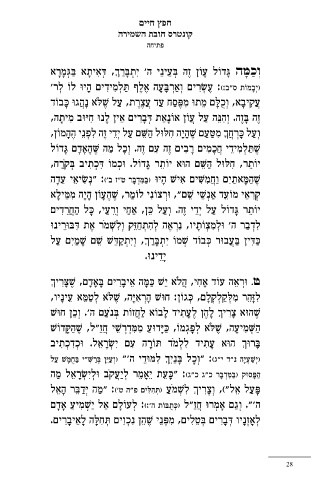
 why.”  Please see Rashi’s commentary on that pasuk.  Moreover,    ארָָמְגַּבּ אָתיִאְדּ ,ךְרַָבְּתִי 'ה יֵניֵעְבּ הֶז ןוָֹע לוֹדָגּ הָמַּכְו
 later in same perasha Moshe Rabbeinu A”H said (4:1) “and they
 will not believe me.”  Hashem Yitbarach responded to Moshe    'רְל וֹל וּיָה םידִיִמְלַתּ ףֶלֶא הָעָבּרְַאְו םירְִשֶׂע :):ב"ס תוֹמָבְי(
 (4:2) “What are you holding in your hand?..and his staff turned    דוֹבָכּ וּגֲהָנ אלֶֹּשׁ לַע ,תרֶֶצֲע דַע חַסֶפִּמ וּתֵמ םָלֻּכְו ,אָביקֲִע
 into a snake.”  Moreover, in that reference (4:6) “and his hand
 was afflicted with Metzora’at (as white) as snow.” (i.e., Moshe    ,הָתיִמ בוּיִּח וּנָל ןיֵא םירִָבְדּ תַאָנוֹא ןוֲֹע לַע הֵנִּהְו .הֶזָבּ הֶז
 Rabbeinu A”H was punished for speaking Lashon Hara against    ,ןוֹמָהֶה יֵנְפִל הֶז ידְֵי לַע םֵשַּׁה לוּלִּח הָיָהֶשׁ םַעַטִּמ ךֲָחרְָכּ לַעְו
 Bnei  Yisrael)     In  perashat  Beshalach  (Shemot  17:2-7)  “and
 13
 the nation contended against Moshe,” and because they argued,    לוֹדָגּ םָדָאָהֶשּׁ הַמ לָכְו .הֶז םִע הֶז םיִברָ םיִמָכֲח ידֵיִמְלַתֶּשׁ
 immediately the adjoining pasuk of the Torah relates (17:8) “and    ,חרַקְֹבּ ביִתְכִדּ וֹמְכוּ .לוֹדָגּ רֵתוֹי אוּה םֵשַּׁה לוּלִּח ,רֵתוֹי
 Amalek came” since they ruined themselves with their mouths.   In
 perashat Mishpatim (Shemot 23:1) “Do not issue a false report,”    הָדֵע יֵאיִשְׂנ" :)'ב ז"ט רָבּדְִמַּבּ( וּיָה שׁיִא םיִשִּׁמֲחַו םִיַתאָמַּהֶשׁ
 that is addressing both one who speaks Lashon Hara and one who
 believes that same Lashon Hara as being the truth, as the gemara    אָליֵמִּמ הָיָה ןוָֹעֶהֶשׁ ,רַמוֹל יִנוֹצרְוּ ,"םֵשׁ יֵשְׁנַא דֵעוֹמ יֵארִקְ
 describes  (Gemara  Pesachim  108a).    In  perashat  Teh’tzaveh,    םידִרֲֵחַה לָכּ ,יַערְֵו יַחַא ,ןֵכּ לַעְו .הֶז ידְֵי לַע לוֹדָגּ רֵתוֹי
 regarding  the  tunic  worn  by  the  Kohein  Gadol  (the  Meh’eel)
 (Shemot 28:32) “there shall be a hem around its entire (head)    וּנירֵוּבִּדּ תֶא רֹמְשִׁלְו קֵזַּחְתִהְל הֶארְִנ ,ויָתוְֹצִמְלוּ 'ה רַבדְִל
 opening.  That entire section (is dealing with this subject) (28:35)    לַע םִיַמָשׁ םֵשׁ שֵׁדּקְַתִיְו ,ךְרַָבְּתִי וֹמְשׁ דוֹבְכּ רוּבֲעַבּ ןיִדַּכּ
 “and its sound will be heard as the Kohein enters The Holy,”  and
 14
 this pasuk is a reference to speaking Lashon Hara as is related in   .וּנידֵָי
 Gemara Arachin (16a).  (More) And also the entire parshyot of
 Tazre’ah and Mehtzorah (Vayikrah, perakim 13-14), the lesions    ךְירִָצֶּשׁ ,םָדָאָבּ םירִָביֵא הָמַּכּ שֵׁי אלֲֹה ,יִחָא דוֹע הֵארְוּ .ט
 that appear in the houses (of those who speak Lashon Hara) and
 the lesions on the clothing and the lesions on the physical body of    ,ויָניֵע אֵמַּטְל אלֶֹּשׁ ,הָיִּארְָה שׁוּח :ןוֹגְכּ ,םָלקְְלקְַלִּמ רֵהָזִּל
 the speaker of Lashon Hara.  He must sit totally isolated, far away    שׁוּח ןֵכְו .'ה םַעֹנְבּ תוֹזֲחַל אוֹבָל דיִתָעֶל ןֶהָל ךְירִָצ אוּהֶשׁ
 from society (from the encampment of Israel).  His atonement are
 the birds that chirp incessantly, alluding to his incessant speech    שׁוֹדָקַּהֶשׁ ,ל"ַזֲח יֵשׁרְדְִמִּמ ַעוּדָיַּכּ ,וֹמְגָפְל אלֶֹּשׁ ,הָעיִמְשַּׁה
 (Lashon Hara), as the Torat Kohanim relates (Sifra, Mehtzorah    ביִתְכדְִכוּ  .לֵארְָשִׂי  םִע  הרָוֹתּ  דֹמְלִל  דיִתָע  אוּה  ךְוּרָבּ
 79), that the (Kohein) gives him words of admonishment “My
 son, lesions (Tzara’at) appear only because of the sin of Lashon    לַע שָׁמֻּחַבּ י"ִשּׁרְַבּ ןֵיַּעְו( "'ה ידֵוּמִּל ךְִיַנָבּ לָכְו" :)ג"י ד"נ הָיְעַשְׁי(
 Hara.”  (Please see that reference).  (More) In perashat Kedoshim
 (19:16) “Do not go and peddle gossip in society,” and (19:17)    הַמ לֵארְָשִׂיְלוּ בקֲֹעַיְל רֵמָאֵי תֵעָכּ" :)ג"כ ג"כ רָבּדְִמַּבּ( קוּסָפַּה
 “(Rebuke your fellow Jew but) Do not come to sin because of that,”    לֵאָה רֵבּדְַיּ הַמ" :)'ט ה"פ םיִלִּהְתּ( ַעֹמְשִׁל ךְירִָצְו ,)"לֵא לַעָפּ
 which are addressing the sins of embarrassing someone.  (More)
 And in perashat Beh’Har (Vayikrah 25:17) “Do not oppress your    םָדָא ַעיִמְשַׁי לַא םָלוֹעְל :):'ה תוֹבֻּתְכּ( ל"ַזֲח וּרְמָא םַגְו ."'ה
 fellow  Jew”  which  is  addressing  oppressive  \  abusive  speech    .םירִָביֵאָל הָלִּחְתּ םיִוְכִנ ןֵהֶשׁ יֵנְפִּמ ,םיִלֵטְבּ םירִָבְדּ ויָנְזָאְל


 45  48  ב קרפ  םייח ץפח  הרימשה תבוח סרטנוק  .הָכרְָבּ וֹל הֶיְהִתּ ,הֶזָבּ ריִהָזַּהֶשׁ ירֲֵה .'וֹגְו הֶכַּי  (in Hebrew – ‘dibur’).  similarity of the two expressions ‘thing’ (in Hebrew – ‘davar’) and ‘word’   of speech that are forbidden \ “bad.”  Their derivation comes from the   17.  In the context of one who libels his newl

