


Page 47 - 72193
P. 47
22
                                             החיתפ
                                               םייח ץפח
                                   Chafetz Chayim    הרימשה תבוח סרטנוק  .ץרֶָאָה לַע הָבִּדּ וּאיִצוֹהֶשׁ  .'אָבַּה םָלוֹעָבוּ הֶזַּה םָלוֹעָבּ  .הֶז ידְֵי לַע רֶצֵיַּה ףֵגָנִּי יאַדַּוְבּ זָאְו ,תיִשׁוּח הָיִּארְ   םיִכוֹז םֶתַּאְו ,ערָָה ןוֹשָׁלִּמ םֶכְמְצַע וּקיִחרְַה ,םֹּנִהיֵגַּה ןִמ   טֵלָמִּהְל םֶכְנוֹצרְ םִא :אוּה ךְוּרָב
                              Kuntres Chovat HaShemirah                                                              הרימשה תבוח סרטנוק
                                       1  chapter                                                                            א קרפ
                                        st

                                                                                                   יִמ ןֵכ אלְֹו .וֹארְוֹבּ תֶא ריִכִּהֶשׁ ,וֹתְּעַדּ לַע דַמָעֶשׁ הָעָשִּׁמ

                   Chafetz Chayim              Chovat HaShemirah                                   ,םֶהָל הַּגֹנ ןיֵאְו םיִכוּשֲׁח ויָמָי וּיְהִי .'ה ךְרֶדְֶבּ ךְֵלוֹה וֹניֵאֶשׁ
                                                                                                                .הָאְמֻטַּה ַחוּר םֶהיֵלֲע ךְָשְׁמִנ יִכּ
                                      st
                                    1  chapter
                                                                                                   תוֹארְִל םיִמָי בֵהֹא 'וֹגְו שׁיִאָה יִמ" :בוּתָכַּה רַמָא הֶזָלְו
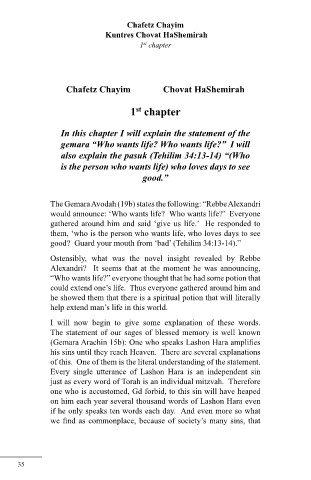
                 In this chapter I will explain the statement of the                               יִמְכוּ[ בוֹט םֶהָבּ תוֹארְִל ויָמָי לַע הֶוּקְַמֶּשׁ וּנְיַהְדּ ,"בוֹט
                 gemara “Who wants life? Who wants life?”  I will
                 also explain the pasuk (Tehilim 34:13-14) “(Who                                   ךְָנוֹשְׁל רֹצְנ" ,]וּלְדְּגִיֶּשְׁכּ תַחַנ םֶהָבּ אֹצְמִל ויָנָבּ לַע הֶוּקְַמֶּשׁ
                 is the person who wants life) who loves days to see                               םִאְו ,בוֹטְו תַחַנ םֶהָבּ אֹצְמִל תוֹוּקְַל לַכוּתּ זָא ,"'וֹגְו ערֵָמ
                                        good.”                                                     רַמָא הֶזָלְו .וּנרְֵמְשִׁי 'ה ,ךְֶפֶהְל ,םוֹלָשְׁו סַח ,זָא ,ןֵכ אלֹ

                                                                                                   הֶזָבּ וּנְיַהְדּ ,יֵיַּח יֵעָבּ ןאַמ ,יֵיַּח יֵעָבּ ןאַמ :ירְֵדְּנַסְכֶּלַא 'ר
               The Gemara Avodah (19b) states the following: “Rebbe Alexandri
               would announce: ‘Who wants life?  Who wants life?’  Everyone                                                 .אָבַּבוּ
               gathered around him and said ‘give us life.’  He responded to
               them, ‘who is the person who wants life, who loves days to see                      ,םיִנָבּ וֹל וּיָה וּלִּא ,וֹשְׁפַנְבּ םָדָאָה ןֵנוֹבְּתִיֶּשׁ ,יִתּרְַמָא דוֹע
               good?  Guard your mouth from ‘bad’ (Tehilim 34:13-14).”                             הָמַּכּ  ,ל ֹּכ  יֵנְפִבּ  ויָנָבּ  תֶא  הֶזַּבְמֶּשׁ  דָחֶאֵמ  ַעֵמוֹשׁ  הָיָהְו
               Ostensibly,  what  was  the  novel  insight  revealed  by  Rebbe                    וּלִּא :וֹל רֵמוֹא הָיָהְו .הֶז רוּבֲע ויָלָע וֹל הָיָה תוֹמוֹערְַתַּהֵמ
               Alexandri?    It  seems  that  at  the  moment  he  was  announcing,
               “Who wants life?” everyone thought that he had some potion that                     ןיֵבְל םָניֵבּ םָתוֹא ַחיִכוֹהְל ךְירִָצ ָתיִיָה ,םָתָבוֹטְל ןֵוַּכְמ ָתיִיָה
               could extend one’s life.  Thus everyone gathered around him and                     ט"י ארָקְִיַּו( הרָוֹתַּה ךְרֶדְֶכּ ,ךְָל ןיִעְמוֹשׁ וּיָה רָשְׁפֶא ,םָמְצַע
               he showed them that there is a spiritual potion that will literally
               help extend man’s life in this world.                                               ךְָל  ןֵתוֹנ  יִתיִיָהְו  ."'וֹגְו  ךֶָתיִמֲע  תֶא  ַחיִכוֹתּ  ַחֵכוֹה"  :)ז"י
               I  will  now  begin  to  give  some  explanation  of  these  words.                 ךְָתָנָוַּכֶּשׁ ,הֶז ןֶפֹאְבּ אלֹ לָבֲא ,הֶז רוּבֲע ןֵח תַאוּשְׁתּ לדֶֹּג
               The statement of our sages of blessed memory is well known                          םָדָאָה ךְירִָצ הֶז ןוָֹעְבּ שָׁמַּמ ןֵכְו .ל ֹּכַה יֵניֵעְבּ םָתוֹזַּבְל קרַ
               (Gemara Arachin 15b): One who speaks Lashon Hara amplifies
               his sins until they reach Heaven.  There are several explanations                   ךְוּרָבּ שׁוֹדָקַּה לֶשׁ ויָנָבּ לַע - רֵבּדְַמ אוּה יִמ לַע עדַיֵל
               of this.  One of them is the literal understanding of the statement.
               Every  single  utterance  of  Lashon  Hara  is  an  independent  sin                םֶתַּא םיִנָבּ" :)'א ד"י םירִָבְדּ( ביִתְכדְִכּ ,םיִנָבּ וּארְקְִנֶּשׁ ,אוּה
               just as every word of Torah is an individual mitzvah.  Therefore                    יאַדַּוְבּ ,תֶלֶעוֹתּ םוּשׁ הֶזִּמ אֵצוֹי ןיֵאֶשׁ ןָויֵכְו ."םֶכיֵהלֱֹא 'הַל
               one who is accustomed, Gd forbid, to this sin will have heaped
               on him each year several thousand words of Lashon Hara even                         וֹחיִכוֹהֶשׁ אלֹ םִא[ .הֶז רוּבֲע ויָלָע סֵעוֹכּ אוּה ךְוּרָבּ שׁוֹדָקַּה
               if he only speaks ten words each day.  And even more so what                        .לֵארְָשִׂי לָכְבּ םָסרְֻפְמַה רוּסִּא אוּהְו ,וֹל ַעֵמוֹשׁ ןיֵאְו ,הָלִּחְתִּמ
               we find as commonplace, because of society’s many sins, that
                                                                                                      .]הֶזָבּ שֵׁיֶּשׁ םיִניִדַּה יֵטרְָפּ 'ד לָלְכּ 'םיִיַּח ץֵפָח'ֶבּ ןֵיַּע


      35                                                                                                                                                          38

