


Page 52 - 72193
P. 52
24
 החיתפ
                                              nd
 םייח ץפח
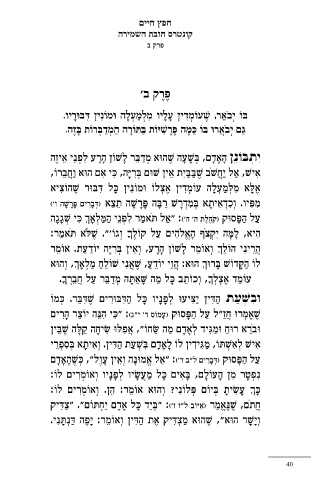
 Chafetz Chayim  הרימשה תבוח סרטנוק  .וירֲָחַא םיִאָבַּה ויָתוֹרוֹדּ לָכְל הֶזָבּ הֶכוֹז יאַדַּוְבּ ,ךְרַָבְּתִי   אָבָבּ( ארָָמְגַּבּ וּניִצָמ ,הֶז לַע ןיִוֻּצְמ ןיֵאֶשׁ ,ם"וּכַּעְבּ וּלִּפֲאַו   תרַוֹתּ( ל"ַזֲח וּרְמָאֶשׁ ,וּניִצָמֶּשּׁ הַמ ןיֵעְכוּ .וירֲָחַא םיִאָבַּה   וּלִּפֲא וּנֶּמִּמ תוֹנָהֵלְו וֹבּ ַעֹּגְנִל רוּסָא בוּשׁ
  Kuntres Chovat HaShemirah      הרימשה תבוח סרטנוק
 Introduction                            ב קרפ

 who attempts to better himself.  (Please reference Gemara Yomah
 38b and other places in Shas as well).

 Second,  man  must  come  to  understand  that  in  removing  the   'ב קרֶֶפּ
 responsibility of mitzvot from himself, even if that obligation
 is  not  completely  removed,  Gd  forbid  (we  are  not  talking    .וירָוּבִּדּ ןיִנוֹמוּ הָלְעַמְלִמ ויָלָע ןידְִמוֹעֶשׁ ,רַאֹבְי וֹבּ
 about that kind of person), but rather this man assumes some
 leniencies  for  himself,  then  his  worth  in  Heaven’s  esteem  is   .הֶזָבּ תוֹרְבּדְַמַה הרָוֹתַּבּ תוֹיִּשׁרָָפּ הָמַּכּ וֹבּ וּרֲאֹבְי םַגּ
 very greatly diminished.  Regarding this man, it is written that
 he  does  not  serve  Elokim.   The  prophet  Malachi  address  this    הֶזיֵא יֵנְפִל ערָָה ןוֹשָׁל רֵבּדְַמ אוּהֶשׁ הָעָשְׁבּ ,םָדָאָה ןֵנוֹבְּתִי
 concept at the end of the sefer (3:18) “You will return and see
 the difference between the Tzadik and the Rasha and between    ,וֹרֵבֲחַו אוּה םִא יִכּ ,הָיּרְִבּ םוּשׁ ןיֵא תִיַבַּבֶּשׁ בֹשֲׁחַי לַא ,שׁיִא
 one who serves Hashem and one who doesn’t.”   In its dialog,
 the Gemara Hagigah (9b) asks “but the ‘Tzadik’ is in fact ‘one    איִצוֹהֶשׁ רוּבִּדּ לָכּ ןיִנוֹמוּ וֹלְצֶא ןידְִמוֹע הָלְעַמְלִּמ אָלֶּא
 who serves Hashem’ and the ‘Rasha’ is in fact ‘one who does    )'ו הָשׁרָָפּ םירִָבְדּ( אֵצֵת הָשׁרָָפּ הָבּרַ שׁרָדְִמְבּ אָתיִאדְִכְו .ויִפִּמ
 not serve Him?”  (Why is the gemara redundant?)  The gemara
 answers, (both of these particular men are in fact Tzadikim, yet)    הָגָגְשׁ יִכּ ךְָאְלַמַּה יֵנְפִל רַמא ֹּת לַא" :)'ה 'ה תֶלֶהקֹ( קוּסָפַּה לַע
 the  categorization  represents  the  difference  between  one  who    :רַמא ֹּת אלֶֹּשׁ ."'וֹגְו ךֶָלוֹק לַע םיִהלֱֹאָה ףֹצקְִי הָמָּל ,איִה
 reviews his learning 100 times and one who reviews his learning
 101 times (and ostensibly this same rule applies to the observance    רֵמוֹא .תַעדַוֹי הָיּרְִבּ ןיֵאְו ,ערָָה ןוֹשָׁל רֵמוֹאְו ךְֵלוֹה יִנירֲֵה
 of mitzvot).   Since this man did not complete the review of his    אוּהְו ,ךְָאְלַמ ַחֵלוֹשׁ יִנֲאֶשׁ ,ַעדֵוֹי יֵוֲה :אוּה ךְוּרָבּ שׁוֹדָקַּה וֹל
 learning as did his friend, his worth becomes diminished and he
 is called one who does not serve Elokim, meaning he did not   .ךָרְֵבֲח לַע רֵבּדְַמ הָתַּאָשּׁ הַמ לָכּ בֵתוֹכְו ,ךְָלְצֶא דֵמוֹע
 toil to wholeheartedly serve Hashem in an appropriate manner.
 All the more so in our discussion, if he is not careful about any    וֹמְכּ .רֵבִּדֶּשׁ םירִוּבִּדַּה לָכּ ויָנָפְל וּעיִצַּי ןיִדַּה תַעְשִׁבוּ
 of them (sins of speech), for example, (to avoid) lies or scoffing
 or controversy or embarrassing others or especially if he speaks    םירִָה רֵצוֹי הֵנִּה יִכּ" :)ג"י 'ד סוֹמָע( קוּסָפַּה לַע ל"ַזֲח וּרְמָאֶשׁ
 Lashon Hara or Rechilut or some comparable transgression, most    ןיֵבֶּשׁ הָלּקַ הָחיִשׂ וּלִּפֲא ,"וֹחֵשּׂ הַמ םָדָאְל דיִגַּמוּ ַחוּר ארֵֹבוּ
 certainly his worth will be very, very greatly diminished.  He will
 moan at the end when his flesh is decaying (in the grave) and he    ירְֵפִסְבּ אָתיִאְו .ןיִדַּה תַעְשִׁבּ םָדָאָל וֹל ןידִיִגַּמ ,וֹתְּשִׁאְל שׁיִא
 will say: “How could I have hated mussar and not have listened    םָדָאָהֶשְׁכּ ,"לֶוָע ןיֵאְו הָנוּמֱא לֵא" :)'ד ב"ל םירִָבְדּ( קוּסָפַּה לַע
 to Hashem’s voice warning us in His Torah about all of these
 things.”  Thus one who wants to protect his soul will be wary to    :וֹל םירְִמוֹאְו ויָנָפְל ויָשֲׂעַמ לָכּ םיִאָבּ ,םָלוֹעָה ןִמ רָטְפִנ
 guard himself from all of these ten qualities that are listed at the    :וֹל םירְִמוֹאְו .ןֵה :רֵמוֹא אוּהְו ?יִנוֹלְפּ םוֹיְבּ ָתיִשָׂע ךְָכּ
 end of the sefer and he will receive good in this world and in the
 next world.     קיִדַּצ" ."םוֹתְּחַי םָדָא לָכּ דַיְבּ" :)'ז ז"ל בוֹיִּא( רַמֱאֶנֶּשׁ ,םֹתֲח

               .יִנָתְּנַדּ הֶפָי :רֵמוֹאְו ןיִדַּה תֶא קיִדְּצַמ אוּהֶשׁ ,"אוּה רָשָׁיְו


 33                                                                           40

