


Page 3 - Handout Digital Electronics
P. 3
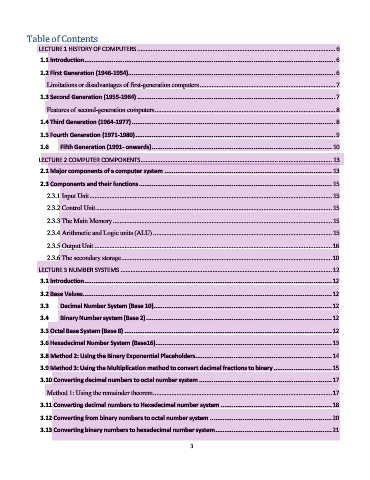
Table of Contents

              LECTURE 1 HISTORY OF COMPUTERS ...................................................................................................................... 6
              1.1 Introduction .......................................................................................................................................... 6
              1.2 First Generation (1946-1954).................................................................................................................. 6

                Limitations or disadvantages of first-generation computers ................................................................................. 7

              1.3 Second Generation (1955-1964) ............................................................................................................. 7
                Features of second-generation computers ............................................................................................................ 8

              1.4 Third Generation (1964-1977) ................................................................................................................ 8
              1.5 Fourth Generation (1971-1980) .............................................................................................................. 9

              1.6    Fifth Generation (1991- onwards) ................................................................................................... 10
              LECTURE 2 COMPUTER COMPONENTS .................................................................................................................. 13

              2.1 Major components of a computer system ............................................................................................ 13
              2.3 Components and their functions .......................................................................................................... 15

                2.3.1 Input Unit ................................................................................................................................................. 15
                2.3.2 Control Unit ............................................................................................................................................. 15

                2.3.3 The Main Memory ................................................................................................................................... 15
                2.3.4 Arithmetic and Logic units (ALU) ........................................................................................................... 15

                2.3.5 Output Unit .............................................................................................................................................. 16
                2.3.6 The secondary storage .............................................................................................................................. 10

              LECTURE 3 NUMBER SYSTEMS .............................................................................................................................. 12
              3.1 Introduction ........................................................................................................................................ 12

              3.2 Base Values ......................................................................................................................................... 12
              3.3    Decimal Number System (Base 10) .................................................................................................. 12

              3.4    Binary Number system (Base 2) ...................................................................................................... 12

              3.5 Octal Base System (Base 8) .................................................................................................................. 12
              3.6 Hexadecimal Number System (Base16) ................................................................................................. 13

              3.8 Method 2: Using the Binary Exponential Placeholders ........................................................................... 14
              3.9 Method 3: Using the Multiplication method to convert decimal fractions to binary ................................ 15

              3.10 Converting decimal numbers to octal number system ......................................................................... 17
                Method 1: Using the remainder theorem ........................................................................................................... 17

              3.11 Converting decimal numbers to Hexadecimal number system ............................................................. 18

              3.12 Converting from binary numbers to octal number system ................................................................... 20
              3.13 Converting binary numbers to hexadecimal number system ................................................................ 21


                                                                3

