


Page 8 - Handout Digital Electronics
P. 8
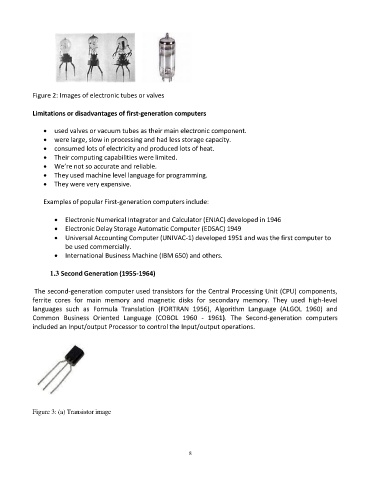
Figure 2: Images of electronic tubes or valves

            Limitations or disadvantages of first-generation computers

               •  used valves or vacuum tubes as their main electronic component.
               •  were large, slow in processing and had less storage capacity.
               •  consumed lots of electricity and produced lots of heat.
               •  Their computing capabilities were limited.
               •  We’re not so accurate and reliable.
               •  They used machine level language for programming.
               •  They were very expensive.

               Examples of popular First-generation computers include:

                   •  Electronic Numerical Integrator and Calculator (ENIAC) developed in 1946
                   •  Electronic Delay Storage Automatic Computer (EDSAC) 1949
                   •  Universal Accounting Computer (UNIVAC-1) developed 1951 and was the first computer to
                       be used commercially.
                   •  International Business Machine (IBM 650) and others.

                  1.3 Second Generation (1955-1964)

            The second-generation computer used transistors for the Central Processing Unit (CPU) components,
            ferrite  cores  for  main  memory  and  magnetic  disks  for  secondary  memory.  They  used  high-level
            languages  such  as  Formula  Translation  (FORTRAN  1956),  Algorithm  Language  (ALGOL  1960)  and
            Common  Business  Oriented  Language  (COBOL  1960  -  1961).  The  Second-generation  computers
            included an Input/output Processor to control the Input/output operations.


            Figure 3: (a) Transistor image


                                                                8

