


Page 10 - Handout Digital Electronics
P. 10
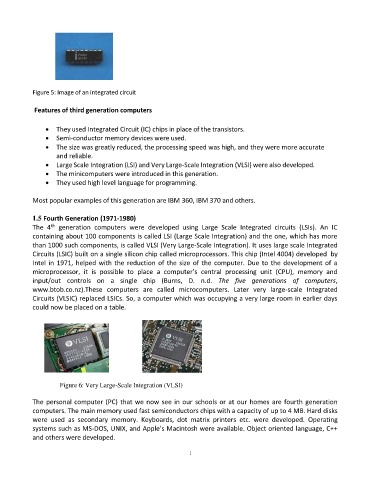
Figure 5: Image of an integrated circuit

            Features of third generation computers

                •  They used Integrated Circuit (IC) chips in place of the transistors.
                •  Semi-conductor memory devices were used.
                •  The size was greatly reduced, the processing speed was high, and they were more accurate
                    and reliable.
                •  Large Scale Integration (LSI) and Very Large-Scale Integration (VLSI) were also developed.
                •  The minicomputers were introduced in this generation.
                •  They used high level language for programming.

            Most popular examples of this generation are IBM 360, IBM 370 and others.

            1.5 Fourth Generation (1971-1980)
                  th
            The  4   generation  computers  were  developed  using  Large  Scale  Integrated  circuits  (LSIs).  An  IC
            containing about 100 components is called LSI (Large Scale Integration) and the one, which has more
            than 1000 such components, is called VLSI (Very Large-Scale Integration). It uses large scale Integrated
            Circuits (LSIC) built on a single silicon chip called microprocessors. This chip (Intel 4004) developed  by
            Intel in 1971, helped with the reduction of the size of the computer. Due to the development of a
            microprocessor,  it  is  possible  to  place  a  computer’s  central  processing  unit  (CPU),  memory  and
            input/out  controls  on  a  single  chip  (Burns,  D.  n.d.  The  five  generations  of  computers,
            www.btob.co.nz).These  computers  are  called  microcomputers.  Later  very  large-scale  Integrated
            Circuits (VLSIC) replaced LSICs. So, a computer which was occupying a very large room in earlier days
            could now be placed on a table.


                     Figure 6: Very Large-Scale Integration (VLSI)

            The personal computer (PC) that we now see in our schools or at our homes are fourth generation
            computers. The main memory used fast semiconductors chips with a capacity of up to 4 MB. Hard disks
            were  used  as  secondary  memory.  Keyboards,  dot  matrix  printers  etc.  were  developed.  Operating
            systems such as MS-DOS, UNIX, and Apple’s Macintosh were available. Object oriented language, C++
            and others were developed.

                                                                10

