


Page 77 - J0JAPS_VOL14
P. 77
Widodo Puji  / JOJAPS – JOURNAL ONLINE JARINGAN PENGAJIAN SENI BINA
           In  this  research,  we  will  conduct  experiment  to  know  the  influence  of  cooling  temperature  to  the  dimension  of  plastic
        injection process. We conduct the direct survey at Sanpak Unggul Industrie. Shrinkage is one of the constraints that causes the
        high number of product defect, so that, the experiments are performed by varying the cooling temperature of the production
        process. From each variation of the temperature, we obtain the product 5 results that will be verified the real products dimension
        (size).  Product  verification  involves  measuring  the  dimensions  of  the  length,  width,  and  height  of  the  thin  wall  square  base
        product which are compared to the size of the mold.

        7.0 RESEARCH METHODE

        The parameter setting of the production process are as follows:

        Product : Base Thinwall Square
        Machine : JSW 180 AD-300 H
        Color : Natural
        Material : PP Titanpro 803
        Weight : 32 gram
        Injection Time : 0,23 seconds
        Cooling temperature : 1,7 seconds
        Interval : 0,2 seconds
        Cycle time : 7,5 seconds
        Clamping Force : 205 Ton
        Temperature NH1 : 265ºC
        Temperature H1 : 190ºC
        Temperature H2 : 225ºC
        Temperature H3 : 250ºC
        Temperature H4 : 260ºC
        Temperaure H5 : 265ºC
        Runner Zone 1 : 200ºC
        Runner Zone 2 : 192ºC
        Runner Zone 3 : 205ºC
        Runner Zone 4 : 216ºC
        Cooling Mold : Chiller
        Room Temperature: 30ºC

        Variation of refrigeration used start at temperature 150C up to 320C, with increase of each variation is 0,50C.


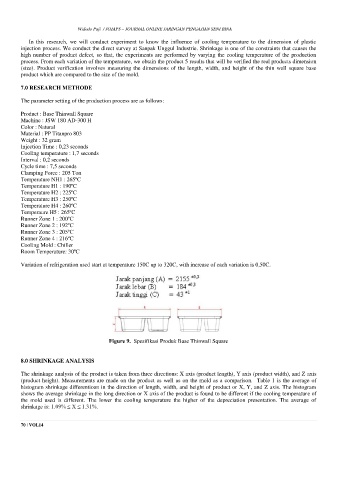
                                       Figure 9.  Spesifikasi Produk Base Thinwall Square


        8.0 SHRINKAGE ANALYSIS

        The shrinkage analysis of the product is taken from three directions: X axis (product length), Y axis (product width), and Z axis
        (product height). Measurements are made on the product as well  as on the mold as a comparison.  Table 1 is the average of
        histogram shrinkage differentioan in the direction of length, width, and height of product or X, Y, and Z axis. The histogram
        shows the average shrinkage in the long direction or X axis of the product is found to be different if the cooling temperature of
        the  mold  used  is  different.  The  lower  the  cooling  temperature  the  higher  of  the  depreciation  presentation.  The  average  of
        shrinkage is: 1.09% ≤ X ≤ 1.31%.


        70 | VOL14

