


Page 29 - Handout Computer Network.
P. 29
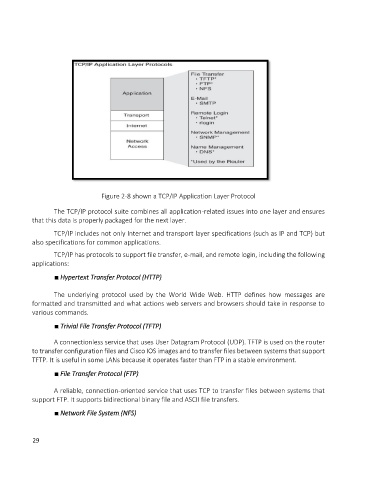
Figure 2-8 shown a TCP/IP Application Layer Protocol

                   The TCP/IP protocol suite combines all application-related issues into one layer and ensures
            that this data is properly packaged for the next layer.

                   TCP/IP includes not only Internet and transport layer specifications (such as IP and TCP) but
            also specifications for common applications.

                   TCP/IP has protocols to support file transfer, e-mail, and remote login, including the following
            applications:
                   ■ Hypertext Transfer Protocol (HTTP)


                   The  underlying  protocol  used  by  the  World  Wide  Web.  HTTP  defines  how  messages  are
            formatted and transmitted and what actions web servers and browsers should take in response to
            various commands.

                   ■ Trivial File Transfer Protocol (TFTP)

                   A connectionless service that uses User Datagram Protocol (UDP). TFTP is used on the router
            to transfer configuration files and Cisco IOS images and to transfer files between systems that support
            TFTP. It is useful in some LANs because it operates faster than FTP in a stable environment.
                   ■ File Transfer Protocol (FTP)


                   A reliable, connection-oriented service that uses TCP to transfer files between systems that
            support FTP. It supports bidirectional binary file and ASCII file transfers.
                   ■ Network File System (NFS)


            29

