


Page 33 - Handout Computer Network.
P. 33
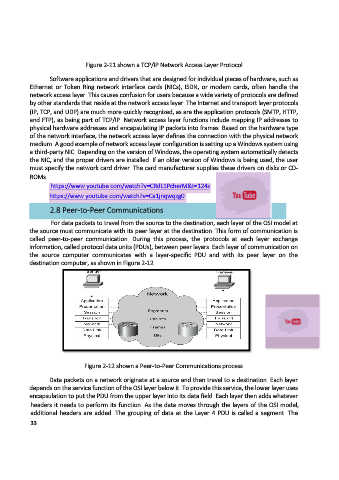
Figure 2-11 shown a TCP/IP Network Access Layer Protocol

                   Software applications and drivers that are designed for individual pieces of hardware, such as
            Ethernet  or  Token  Ring network  interface cards (NICs),  ISDN,  or  modem  cards,  often  handle the
            network access layer. This causes confusion for users because a wide variety of protocols are defined
            by other standards that reside at the network access layer. The Internet and transport layer protocols
            (IP, TCP, and UDP) are much more quickly recognized, as are the application protocols (SMTP, HTTP,
            and FTP), as being part of TCP/IP. Network access layer functions include mapping IP addresses to
            physical hardware addresses and encapsulating IP packets into frames. Based on the hardware type
            of the network interface, the network access layer defines the connection with the physical network
            medium. A good example of network access layer configuration is setting up a Windows system using
            a third-party NIC. Depending on the version of Windows, the operating system automatically detects
            the NIC, and the proper drivers are installed. If an older version of Windows is being used, the user
            must specify the network card driver. The card manufacturer supplies these drivers on disks or CD-
            ROMs.

                   https://www.youtube.com/watch?v=CRdL1PcherM&t=124s

                   https://www.youtube.com/watch?v=Ca1jnqwqzg0

                   2.8 Peer-to-Peer Communications

                    For data packets to travel from the source to the destination, each layer of the OSI model at
            the source must communicate with its peer layer at the destination. This form of communication is
            called  peer-to-peer  communication.  During  this  process,  the  protocols  at  each  layer  exchange
            information, called protocol data units (PDUs), between peer layers. Each layer of communication on
            the  source  computer  communicates  with  a  layer-specific  PDU  and  with  its  peer  layer  on  the
            destination computer, as shown in Figure 2-12.


                               Figure 2-12 shown a Peer-to-Peer Communications process

                   Data packets on a network originate at a source and then travel to a destination. Each layer
            depends on the service function of the OSI layer below it. To provide this service, the lower layer uses
            encapsulation to put the PDU from the upper layer into its data field. Each layer then adds whatever
            headers it needs to perform its function. As the data moves through the layers of the OSI model,
            additional headers are added. The grouping of data at the Layer 4 PDU is called a segment. The
            33

