


Page 36 - Handout Computer Network.
P. 36
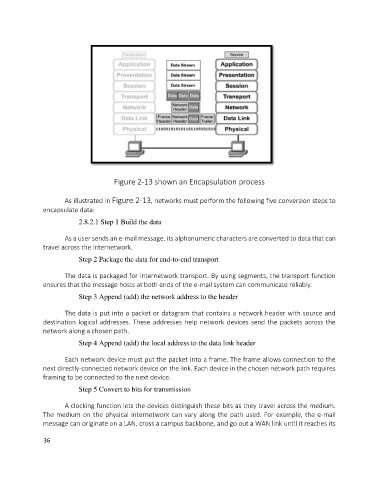
Figure 2-13 shown an Encapsulation process


                      As illustrated in Figure 2-13, networks must perform the following five conversion steps to
               encapsulate data:
                           2.8.2.1 Step 1 Build the data

                      As a user sends an e-mail message, its alphanumeric characters are converted to data that can
               travel across the internetwork.

                           Step 2 Package the data for end-to-end transport

                      The data is packaged for internetwork transport. By using segments, the transport function
               ensures that the message hosts at both ends of the e-mail system can communicate reliably.
                           Step 3 Append (add) the network address to the header


                      The data is put into a packet or datagram that contains a network header with source and
               destination logical addresses. These addresses help network devices send the packets across the
               network along a chosen path.
                           Step 4 Append (add) the local address to the data link header


                      Each network device must put the packet into a frame. The frame allows connection to the
               next directly-connected network device on the link. Each device in the chosen network path requires
               framing to be connected to the next device.
                           Step 5 Convert to bits for transmission


                      A clocking function lets the devices distinguish these bits as they travel across the medium.
               The medium on the physical internetwork can vary along the path used. For example, the e-mail
               message can originate on a LAN, cross a campus backbone, and go out a WAN link until it reaches its

               36

