


Page 232 - M. Abrahim Thesis
P. 232
Chapter (3) Networking Media and Data Link Layers Protocols


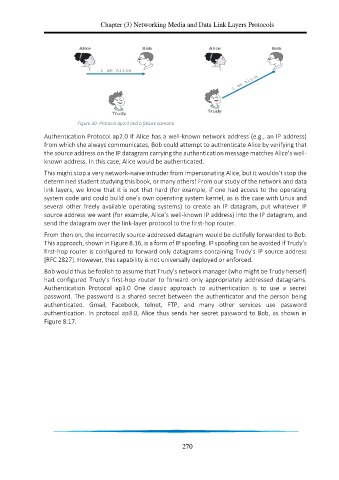
                            Figure 40: Protocol ap1.0 and a failure scenario
                 Authentication Protocol ap2.0 If Alice has a well-known network address (e.g., an IP address)
                 from which she always communicates, Bob could attempt to authenticate Alice by verifying that
                 the source address on the IP datagram carrying the authentication message matches Alice’s well-
                 known address. In this case, Alice would be authenticated.
                 This might stop a very network-naive intruder from impersonating Alice, but it wouldn’t stop the
                 determined student studying this book, or many others! From our study of the network and data
                 link layers, we know that it is not that hard (for example, if one had access to the operating
                 system code and could build one’s own operating system kernel, as is the case with Linux and
                 several  other  freely  available  operating  systems)  to  create  an  IP  datagram,  put  whatever  IP
                 source address we want (for example, Alice’s well-known IP address) into the IP datagram, and
                 send the datagram over the link-layer protocol to the first-hop router.

                 From then on, the incorrectly source-addressed datagram would be dutifully forwarded to Bob.
                 This approach, shown in Figure 8.16, is a form of IP spoofing. IP spoofing can be avoided if Trudy’s
                 first-hop router is configured to forward only datagrams containing Trudy’s IP source address
                 [RFC 2827]. However, this capability is not universally deployed or enforced.

                 Bob would thus be foolish to assume that Trudy’s network manager (who might be Trudy herself)
                 had  configured  Trudy’s  first-hop  router  to  forward  only  appropriately  addressed  datagrams.
                 Authentication  Protocol  ap3.0  One  classic  approach  to  authentication  is  to  use  a  secret
                 password. The password is a shared secret between the authenticator and the person being
                 authenticated.  Gmail,  Facebook,  telnet,  FTP,  and  many  other  services  use  password
                 authentication. In protocol ap3.0, Alice thus sends her secret password to Bob, as shown in
                 Figure 8.17.


                                                                 270

