


Page 233 - M. Abrahim Thesis
P. 233
Computer Network                                                             2026


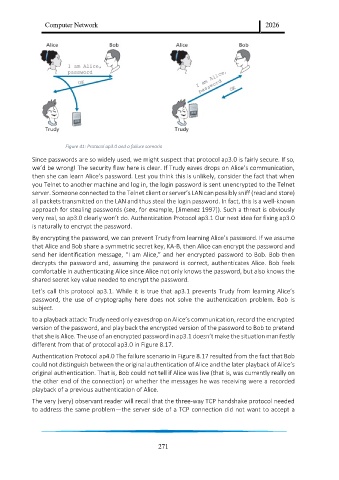
                        Figure 41: Protocol ap3.0 and a failure scenario
            Since passwords are so widely used, we might suspect that protocol ap3.0 is fairly secure. If so,
            we’d be wrong! The security flaw here is clear. If Trudy eaves drops on Alice’s communication,
            then she can learn Alice’s password. Lest you think this is unlikely, consider the fact that when
            you Telnet to another machine and log in, the login password is sent unencrypted to the Telnet
            server. Someone connected to the Telnet client or server’s LAN can possibly sniff (read and store)
            all packets transmitted on the LAN and thus steal the login password. In fact, this is a well-known
            approach for stealing passwords (see, for example, [Jimenez 1997]). Such a threat is obviously
            very real, so ap3.0 clearly won’t do. Authentication Protocol ap3.1 Our next idea for fixing ap3.0
            is naturally to encrypt the password.

            By encrypting the password, we can prevent Trudy from learning Alice’s password. If we assume
            that Alice and Bob share a symmetric secret key, KA-B, then Alice can encrypt the password and
            send her identification message, “I am Alice,” and her encrypted password to Bob. Bob then
            decrypts the password and, assuming the password is correct, authenticates Alice. Bob feels
            comfortable in authenticating Alice since Alice not only knows the password, but also knows the
            shared secret key value needed to encrypt the password.
            Let’s call this protocol ap3.1. While it is true that ap3.1 prevents Trudy from learning Alice’s
            password,  the  use  of  cryptography  here  does  not  solve  the  authentication  problem.  Bob  is
            subject.
            to a playback attack: Trudy need only eavesdrop on Alice’s communication, record the encrypted
            version of the password, and play back the encrypted version of the password to Bob to pretend
            that she is Alice. The use of an encrypted password in ap3.1 doesn’t make the situation manifestly
            different from that of protocol ap3.0 in Figure 8.17.
            Authentication Protocol ap4.0 The failure scenario in Figure 8.17 resulted from the fact that Bob
            could not distinguish between the original authentication of Alice and the later playback of Alice’s
            original authentication. That is, Bob could not tell if Alice was live (that is, was currently really on
            the other end of the connection) or whether the messages he was receiving were a recorded
            playback of a previous authentication of Alice.
            The very (very) observant reader will recall that the three-way TCP handshake protocol needed
            to address the same problem—the server side of a TCP connection did not want to accept a


                                                         271

