


Page 245 - M. Abrahim Thesis
P. 245
Computer Network                                                             2026


            confidentiality,  a  network-layer  security  protocol  could  potentially  provide  other  security
            services.

            For example, it could provide source authentication, so that the receiving entity can verify the
            source of the secured datagram. A network layer security protocol could provide data integrity,
            so that the receiving entity can check for any tampering of the datagram that may have occurred
            while the datagram was in transit.
            A network-layer security service could also provide replay-attack prevention, meaning that Bob
            could detect any duplicate datagrams that an attacker might insert. We will soon see that IPsec
            indeed provides mechanisms for all these security services, that is, for confidentiality, source
            authentication,  data  integrity,  and  replay-attack  prevention.  8.7.1  IPsec  and  Virtual  Private
            Networks (VPNs) An institution that extends over multiple geographical regions often desires its
            own  IP  network,  so  that  its  hosts  and  servers  can  send  data  to  each  other  in  a  secure  and
            confidential manner.

            To  achieve  this  goal,  the  institution  could  actually  deploy  a  stand-alone  physical  network—
            including routers, links, and a DNS infrastructure— that is completely separate from the public
            Internet. Such a disjoint network, dedicated to a particular institution, is called a private network.

             Not surprisingly, a private network can be very costly, as the institution needs to purchase,
            install,  and  maintain  its  own  physical  network  infrastructure.  Instead  of  deploying  and
            maintaining  a  private  network,  many  institutions  today  create  VPNs  over  the  existing  public
            Internet. With a VPN, the institution’s inter-office traffic is sent over the public Internet rather
            than over a physically


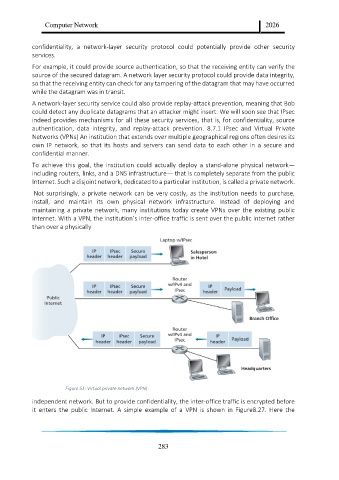
                        Figure 51: Virtual private network (VPN)
            independent network. But to provide confidentiality, the inter-office traffic is encrypted before
            it  enters  the  public  Internet.  A  simple  example  of  a  VPN  is  shown  in  Figure8.27.  Here  the


                                                         283

