


Page 241 - M. Abrahim Thesis
P. 241
Computer Network                                                             2026


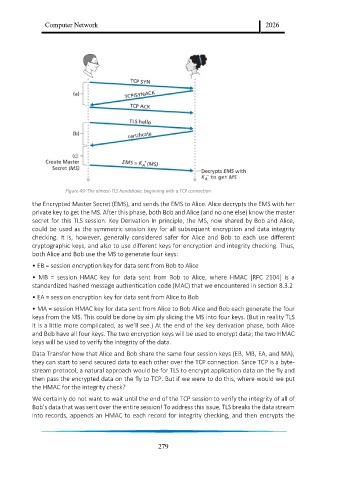
                        Figure 49: The almost-TLS handshake, beginning with a TCP connection

            the Encrypted Master Secret (EMS), and sends the EMS to Alice. Alice decrypts the EMS with her
            private key to get the MS. After this phase, both Bob and Alice (and no one else) know the master
            secret for this TLS session. Key Derivation In principle, the MS, now shared by Bob and Alice,
            could be used as the symmetric session key for all subsequent encryption and data integrity
            checking.  It  is,  however,  generally  considered  safer  for  Alice  and  Bob  to  each  use  different
            cryptographic keys, and also to use different keys for encryption and integrity checking. Thus,
            both Alice and Bob use the MS to generate four keys:

            • EB = session encryption key for data sent from Bob to Alice
            •  MB  =  session  HMAC  key  for  data  sent  from  Bob  to  Alice,  where  HMAC  [RFC  2104]  is  a
            standardized hashed message authentication code (MAC) that we encountered in section 8.3.2
            • EA = session encryption key for data sent from Alice to Bob

            • MA = session HMAC key for data sent from Alice to Bob Alice and Bob each generate the four
            keys from the MS. This could be done by sim ply slicing the MS into four keys. (But in reality TLS
            it is a little more complicated, as we’ll see.) At the end of the key derivation phase, both Alice
            and Bob have all four keys. The two encryption keys will be used to encrypt data; the two HMAC
            keys will be used to verify the integrity of the data.

            Data Transfer Now that Alice and Bob share the same four session keys (EB, MB, EA, and MA),
            they can start to send secured data to each other over the TCP connection. Since TCP is a byte-
            stream protocol, a natural approach would be for TLS to encrypt application data on the fly and
            then pass the encrypted data on the fly to TCP. But if we were to do this, where would we put
            the HMAC for the integrity check?

            We certainly do not want to wait until the end of the TCP session to verify the integrity of all of
            Bob’s data that was sent over the entire session! To address this issue, TLS breaks the data stream
            into records, appends an HMAC to each record for integrity checking, and then encrypts the


                                                         279

