


Page 86 - M. Abrahim Thesis
P. 86
Chapter (4) Network Design


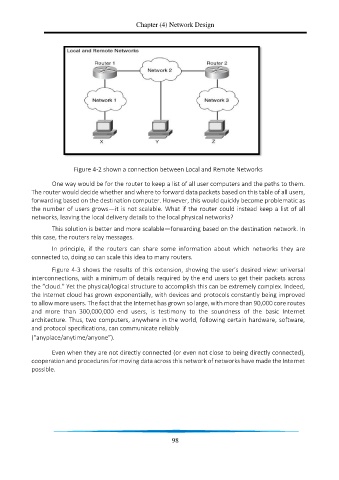
                           Figure 4-2 shown a connection between Local and Remote Networks


                   One way would be for the router to keep a list of all user computers and the paths to them.
            The router would decide whether and where to forward data packets based on this table of all users,
            forwarding based on the destination computer. However, this would quickly become problematic as
            the number of users grows—it is not scalable. What if the router could instead keep a list of all
            networks, leaving the local delivery details to the local physical networks?

                   This solution is better and more scalable—forwarding based on the destination network. In
            this case, the routers relay messages.

                   In  principle,  if  the  routers  can  share  some  information  about  which  networks  they  are
            connected to, doing so can scale this idea to many routers.
                   Figure 4-3 shows the results of this extension, showing the user’s desired view: universal
            interconnections, with a minimum of details required by the end users to get their packets across
            the “cloud.” Yet the physical/logical structure to accomplish this can be extremely complex. Indeed,
            the Internet cloud has grown exponentially, with devices and protocols constantly being improved
            to allow more users. The fact that the Internet has grown so large, with more than 90,000 core routes
            and  more  than  300,000,000  end  users,  is  testimony  to  the  soundness  of  the  basic  Internet
            architecture. Thus, two computers, anywhere in the world, following certain hardware, software,
            and protocol specifications, can communicate reliably
            (“anyplace/anytime/anyone”).


                   Even when they are not directly connected (or even not close to being directly connected),
            cooperation and procedures for moving data across this network of networks have made the Internet
            possible.


                                                             98

