


Page 334 - American Stories, A History of the United States
P. 334
Watch the Video  Mastering Time and Space: how the Railroads changed America                     13.1


                                                                                                                           13.2


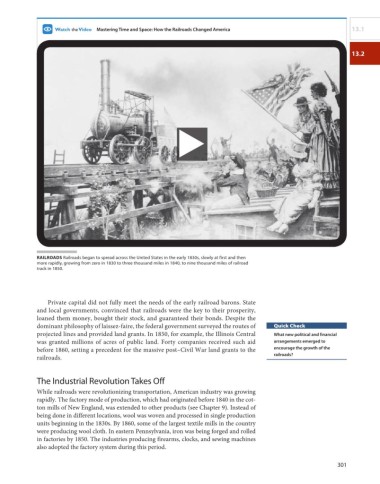
                    RAilRoAdS Railroads began to spread across the United states in the early 1830s, slowly at first and then
                    more rapidly, growing from zero in 1830 to three thousand miles in 1840, to nine thousand miles of railroad
                    track in 1850.


                       Private capital did not fully meet the needs of the early railroad barons. State
                    and local governments, convinced that railroads were the key to their prosperity,
                    loaned them money, bought their stock, and guaranteed their bonds. Despite the
                    dominant philosophy of laissez-faire, the federal government surveyed the routes of   Quick Check
                    projected lines and provided land grants. In 1850, for example, the Illinois Central   What new political and  financial
                    was granted millions of acres of public land. Forty companies received such aid     arrangements emerged to
                    before 1860, setting a precedent for the massive post–Civil War land grants to the     encourage the growth of the
                    railroads.                                                                    railroads?


                    the industrial Revolution takes Off
                    While railroads were revolutionizing transportation, American industry was growing
                    rapidly. The factory mode of production, which had originated before 1840 in the cot-
                    ton mills of New England, was extended to other products (see Chapter 9). Instead of
                    being done in different locations, wool was woven and processed in single production
                    units beginning in the 1830s. By 1860, some of the largest textile mills in the country
                    were producing wool cloth. In eastern Pennsylvania, iron was being forged and rolled
                    in factories by 1850. The industries producing firearms, clocks, and sewing machines
                    also adopted the factory system during this period.


                                                                                                                       301

