


Page 557 - Business Principles and Management
P. 557
Unit 6


                                                                        price, sell it through retail stores, and advertise it
                                                                        on the radio. Or it could be to produce a medium-
                                                                        priced item to be advertised on television and sold
                                                                        door-to-door to senior citizens. Can you identify
                                                                        the marketing mix for one of the businesses that
                                                                        Tony Taylor thought about in the chapter-opening
                                                                        scenario?
                                                                           Several companies marketing the same product
                                                                    PHOTO: © GETTY IMAGES/PHOTODISC.  must review their decisions frequently, because con-
                                                                        may use very different marketing mixes, because
                                                                        they made different decisions. Furthermore, they

                                                                        ditions change constantly. Changes in general eco-
                                                                        nomic conditions, changes in consumer needs, and
                                                                        the development of new or improved products by
                                                                        competitors are factors that may require a change
                                                                        in the marketing mix. Next, you will learn about
                                                                        the decisions involved in each marketing mix
                                                                        element.

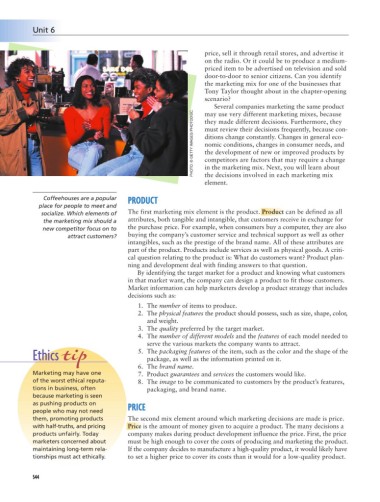
                     Coffeehouses are a popular  PRODUCT
                    place for people to meet and
                     socialize. Which elements of  The first marketing mix element is the product. Product can be defined as all
                     the marketing mix should a  attributes, both tangible and intangible, that customers receive in exchange for
                     new competitor focus on to  the purchase price. For example, when consumers buy a computer, they are also
                             attract customers?  buying the company’s customer service and technical support as well as other
                                                intangibles, such as the prestige of the brand name. All of these attributes are
                                                part of the product. Products include services as well as physical goods. A criti-
                                                cal question relating to the product is: What do customers want? Product plan-
                                                ning and development deal with finding answers to that question.
                                                   By identifying the target market for a product and knowing what customers
                                                in that market want, the company can design a product to fit those customers.
                                                Market information can help marketers develop a product strategy that includes
                                                decisions such as:
                                                   1. The number of items to produce.
                                                   2. The physical features the product should possess, such as size, shape, color,
                                                      and weight.
                                                   3. The quality preferred by the target market.
                                                   4. The number of different models and the features of each model needed to
                  Ethics tip                       5. The packaging features of the item, such as the color and the shape of the
                                                      serve the various markets the company wants to attract.
                                                      package, as well as the information printed on it.
                                                   6. The brand name.
                  Marketing may have one           7. Product guarantees and services the customers would like.
                  of the worst ethical reputa-     8. The image to be communicated to customers by the product’s features,
                  tions in business, often            packaging, and brand name.
                  because marketing is seen
                  as pushing products on        PRICE
                  people who may not need
                  them, promoting products      The second mix element around which marketing decisions are made is price.
                  with half-truths, and pricing  Price is the amount of money given to acquire a product. The many decisions a
                  products unfairly. Today      company makes during product development influence the price. First, the price
                  marketers concerned about     must be high enough to cover the costs of producing and marketing the product.
                  maintaining long-term rela-   If the company decides to manufacture a high-quality product, it would likely have
                  tionships must act ethically.  to set a higher price to cover its costs than it would for a low-quality product.


                  544

