


Page 561 - Business Principles and Management
P. 561
Unit 6


                                                                        the introduction stage include Web-ready cellular
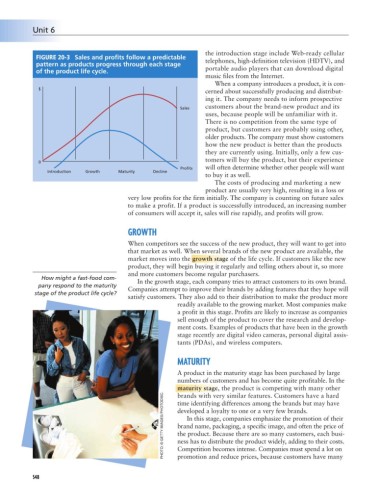
                   FIGURE 20-3 Sales and profits follow a predictable   telephones, high-definition television (HDTV), and
                   pattern as products progress through each stage
                   of the product life cycle.                           portable audio players that can download digital
                                                                        music files from the Internet.
                                                                           When a company introduces a product, it is con-
                    $
                                                                        cerned about successfully producing and distribut-
                                                                        ing it. The company needs to inform prospective
                                                                        customers about the brand-new product and its
                                                                Sales
                                                                        uses, because people will be unfamiliar with it.
                                                                        There is no competition from the same type of
                                                                        product, but customers are probably using other,
                                                                        older products. The company must show customers
                                                                        how the new product is better than the products
                                                                        they are currently using. Initially, only a few cus-
                                                                        tomers will buy the product, but their experience
                    0
                                                                Profits  will often determine whether other people will want
                      Introduction  Growth   Maturity   Decline
                                                                        to buy it as well.
                                                                           The costs of producing and marketing a new
                                                                        product are usually very high, resulting in a loss or
                                                very low profits for the firm initially. The company is counting on future sales
                                                to make a profit. If a product is successfully introduced, an increasing number
                                                of consumers will accept it, sales will rise rapidly, and profits will grow.


                                                GROWTH
                                                When competitors see the success of the new product, they will want to get into
                                                that market as well. When several brands of the new product are available, the
                                                market moves into the growth stage of the life cycle. If customers like the new
                                                product, they will begin buying it regularly and telling others about it, so more
                                                and more customers become regular purchasers.
                     How might a fast-food com-    In the growth stage, each company tries to attract customers to its own brand.
                    pany respond to the maturity  Companies attempt to improve their brands by adding features that they hope will
                  stage of the product life cycle?
                                                satisfy customers. They also add to their distribution to make the product more
                                                               readily available to the growing market. Most companies make
                                                               a profit in this stage. Profits are likely to increase as companies
                                                               sell enough of the product to cover the research and develop-
                                                               ment costs. Examples of products that have been in the growth
                                                               stage recently are digital video cameras, personal digital assis-
                                                               tants (PDAs), and wireless computers.

                                                               MATURITY

                                                               A product in the maturity stage has been purchased by large
                                                               numbers of customers and has become quite profitable. In the
                                                               maturity stage, the product is competing with many other
                                                           PHOTO: © GETTY IMAGES/PHOTODISC.  developed a loyalty to one or a very few brands.
                                                               brands with very similar features. Customers have a hard
                                                               time identifying differences among the brands but may have

                                                                  In this stage, companies emphasize the promotion of their
                                                               brand name, packaging, a specific image, and often the price of
                                                               the product. Because there are so many customers, each busi-
                                                               ness has to distribute the product widely, adding to their costs.
                                                               Competition becomes intense. Companies must spend a lot on


                  548                                          promotion and reduce prices, because customers have many

