


Page 152 - 72193
P. 152
124
                                            31
 5
 ח קרפ
                                              th
 םייח ץפח
 Chafetz Chayim  הרימשה תבוח סרטנוק  .וֹמְשִׁל שָׁדּקְִמ תיֵבּ תוֹנְבִל קקֵוֹתְּשִׁמוּ וֹמְצַע תֶא  Him.”   “Abode,” or “Dwelling;” thus, homiletically, “I will build a sanctuary for   Targum  explains,  it  can  originate  from  the  word  “Neve,”  meaning   “Beautiful”  –  to  speak  of  Hashem’s  “beauty;”  or  alternatively  a
  Kuntres Chovat HaShemirah      הרימשה תבוח סרטנוק
 th
 8  chapter                              ט קרפ
 all of society will speak Lashon Hara.  (Even though the Gemara    ,רוּבִּדַּה  ַחֹכְבּ  ןיִיוּלְתֶּשׁ  ,ןיִשֲׂעַו  ןיִואָל  הָמַּכּ  דוֹע  שֵׁיְו[
 explains this as meaning – not all of society is guilty of violating
 the sin of Lashon Hara but everyone in society is guilty of using    ,)ד"י ט"י ארָקְִיַּו( "לֹשְׁכִמ ןֵתִּת אלֹ רֵוִּע יֵנְפִלְו"ִדּ ואָלַּה ןוֹגְכּ
 speech that alludes to Lashon Hara.  The Rambam’s comment    יֵנְפִּמ הֶז הֶשׂוֹעְו ,תֶנֶגוֹה הָּניֵאֶשׁ הָצֵע וֹרֵבֲחַל ןֵתִּל אלֶֹּשׁ
 in this regard is well known, that were it only that we should be
 saved from literal Lashon Hara).  Given this is so, how can we    ,םירִוּסרְַסַּהְו םיִנָכְדַּשַּׁה לֶצֵא יוּצָמ הֶזְו .וֹלֶּשׁ הָיִּנְפּ הֶזיֵא
 advocate for others?  Chazal have referred to this question and    "דֹמְחַת אלֹ"ְדּ ואָלַּה םַגְו .םירְִכוֹמַּה לֶצֵא םַגּ םיִמָעְפִלְו
 have stated (Yerushalmi Yomah 5a) that each generation in which
 the Beit HaMikdash has not been built is considered as though it    םָדָאָה לַע םיִערֵ  תוֹבּרְַהְל  אלֶֹּשׁ וּנרְַהְזֻהֶשׁ  ,)ד"י  'כ תוֹמְשׁ(
 was destroyed in their days.  The reason is obvious, that the sins    .וֹל הָנּרְֶכְּמִיֶּשׁ וֹא ,הרָוֹחְס הֶזיֵא וֹל וּנְתִּיֶּשׁ ,וֹבּ ריִצְפַהְלוּ
 that caused the destruction of our Beit HaMikdash (nearly 2,000
 years ago) are the very same sins that are preventing us today    םַגְו .זַעַל ןוֹשְׁלִבּ וּלִּפֲא ,רקֶֶשׁ תוֹעוּבְשׁוּ תוֹלָלקְ ןַיְנִע םַגְו
 from rebuilding it.  And so, with great certainty and out of a sense    :רֵמוֹאֶשׁ יִמ ,ןוֹגְכּ ,)'ג 'ל רָבּדְִמַּבּ( "וֹרָבְדּ לֵחַי אלֹ"ְדּ ואָלַּה
 of truth and righteousness, we are obliged to strengthen ourselves
 with all of our might to correct this problem so that our Beit    ר ֹּתְסִלִּמ רֵהָזִּי ןֵכְו .תוְֹצִמ רָאְשׁ תוֹשֲׂעַל וֹא ,הֶז קרֶֶפּ הֶנְשֶׁא
 HaMikdash can again be built and return the glory of Hashem    ט"י ארָקְִיַּו( ביִתְכִדּ הַמִּמ ,]וֹבּרַ לֶשְׁו[ וֹמִּאְו ויִבָא לֶשׁ םֶהירְֵבִדּ
 back to its proper place.  Each day we recite in our prayers “This
 is my Gd and I will exalt Him.”  The Targum Onkelos (Shemot    :):א"ל ןיִשׁוּדּקִ( ל"ַזֲח וּרְמָאְו ."וּארָיִתּ ויִבָאְו וֹמִּא שׁיִא" :)'ג
 15:2) explains this as meaning “This is my Gd and I will build the
 Beit HaMikdash for Him.”   Were it so that all of Israel would    איִצוֹהְלִּמ רֵהָזִּל ןֵכְו .םֶהירְֵבִדּ ר ֹּתְסִי אלֶֹּשׁ ?ארָוֹמ וּהֶזיֵא
 26
 dedicate themselves and yearn to build the Beit HaMikdash for    לַלְכִבּ  וּהֶזֶּשׁ  ,]זַעַל  ןוֹשְׁלִבּ  וּלִּפֲא[  ,הָלָטַּבְל  םִיַמָשׁ  םֵשׁ
 the sake of His Name.
               ."ארָיִתּ ךָיֶהלֱֹא 'ה תֶא" :)ג"י 'ו םירִָבְדּ( הרָוֹתַּבּ בוּתָכֶּשּׁ הַמ
 Without any doubt at all, if we had permission to do this, each    הרָָשֲׂעָה וֹמְכּ ךְָכּ לָכּ ןיִיוּצְמ ןָניֵא וּלֵּא םירִָבְדֶּשׁ יֵנְפִּמ ,ןֵכָא
 and every Jew would want to take out his money and involve    םיִנְמַּדְּזִמֶּשְׁכּ םָנְמָא ,דַחַיְבּ םיִתְּפרֵַצ אלֹ ןֵכּ לַע ,םירִָבְדּ
 himself with this task with all of his heart (physically) and soul
 (emotionally) to help build a house (Beit HaMikdash) for the sake   .]ןֶהיֵלֲע רֹבֲעַל אלֶֹּשׁ ,דֹאְמ רֵהָזִּל שֵׁי ,םָדָאָל
 of Hashem.  Given that this is so, then within the framework of
 our topic (of disciplining our speech), where no money is required
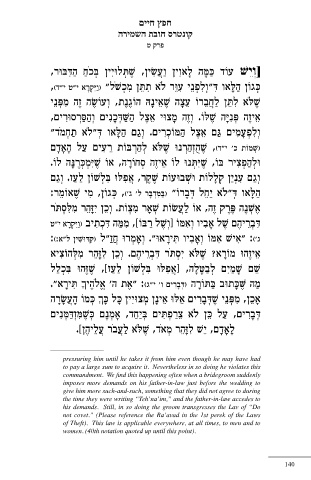
 and it is not necessary to travel to Jerusalem for this purpose,      pressuring him until he takes it from him even though he may have had
 one must only be careful to discipline the words that come out   to pay a large sum to acquire it.  Nevertheless in so doing he violates this
 of his mouth so that they won’t ruin his own power of speech,   commandment.  We find this happening often when a bridegroom suddenly
 then necessarily he will distance himself from Lashon Hara and   imposes  more  demands  on  his  father-in-law  just  before  the  wedding  to
                  give him more such-and-such, something that they did not agree to during
 argumentation, anger and oppressive speech and language that   the time they were writing “Teh’na’im,” and the father-in-law accedes to
 causes embarrassment.  All of these things prevent the building   his demands.  Still, in so doing the groom transgresses the Lav of “Do
 of the Beit HaMikdash.  People who do make this effort will   not covet.” (Please reference the Ra’avad in the 1st perek of the Laws
                  of Theft).  This law is applicable everywhere, at all times, to men and to
                  women. (40th notation quoted up until this point).


 125                                                                          140

