


Page 154 - 72193
P. 154
126
 ח קרפ
                                              th
 םייח ץפח
 Chafetz Chayim  הרימשה תבוח סרטנוק  .]לֵארְָשִׂי לָכְל הֶכַּזיִו ,תוֹרוֹדַּה לָכּ ףוֹס דַע ויָתוֹרוֹדְלוּ  .וּנְבַתָכֶּשׁ וֹמְכּ ,תִיַבַּה ןַיְנִבְל וּרְזַעַיְו ,דֹאְמ הָלוֹדְגּ ןָתוּכְז   ןיִעָמְשִׁנ וירָָבְדּ ןיֵאֶשׁ ,הֶאוֹר אוּה םִא ףַאְו .]ל"ק דוּמַּע   'א קֶלֵח ןוֹשָׁלַּה תרַיִמְשִׁבּ יִתּקְַתְּעֶהְו[ .'ךְֶל' תַשׁרָָפּ שָׁדָ
  Kuntres Chovat HaShemirah      הרימשה תבוח סרטנוק
 8  chapter                              י קרפ
 th
 The teaching of Chazal in this regard is known (by all) (please
 see Gemara Menachot 27a and Vayikrah Rabbah 30:12), that the
 Lulav we grasp on Sukkot and the mitzvot that band together
 with it, namely the Etrog, the Hadas and the Arava are allusions
 to other concepts.  The Etrog has taste and fragrance, the Hadas
 has fragrance but no taste, the Lulav (which comes from the date   'י קרֶֶפּ
 palm tree) has taste but no fragrance and the Arava has neither
 taste nor fragrance.   (Regarding the concepts alluded to by these   .הרָיִמְשַּׁה יֵאָנְתּ
 mitzvot)  HaKadosh  Baruch  Hu  said  to  join  these  four  species
 together.  Let the Etrog come with its taste and fragrance which
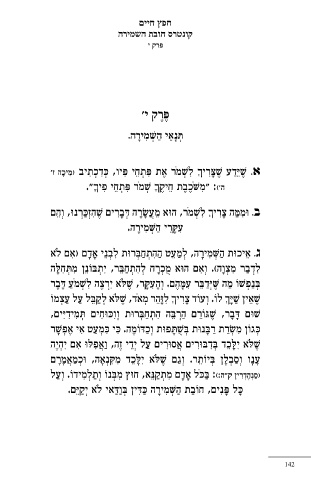
 alludes  to  Tzadikim  who  possess  both  Torah  and  good  deeds    'ז הָכיִמ( ביִתְכדְִכּ ,ויִפּ יֵחְתִפּ תֶא רֹמְשִׁל ךְירִָצֶּשׁ עדֵַיֶּשׁ .א
 and atone for those people who have neither taste nor fragrance
 (i.e.,  Jews  who  have  neither  Torah  nor  good  deeds).    Based   ."ךָיִפ יֵחְתִפּ רֹמְשׁ ךָקֶיֵח תֶבֶכ ֹּשִׁמ" :)'ה
 on this, those who are complete (in their observance or Torah
 and mitzvot) will atone for those who do not follow in the path    םֵהְו ,וּנרְַכְּזִהֶשׁ םירִָבְדּ הרָָשֲׂעֵמ אוּה ,רֹמְשִׁל ךְירִָצ הַמִּמוּ .ב
 Hashem set for us.  This being so, since in every generation one
 may find several million complete Jewish people, then why has   .הרָיִמְשַּׁה ירֵָקִּע
 the rebuilding of the Beit HaMikdash been so delayed?
 But truthfully, when one thinks carefully about this, he will realize    אלֹ םִא( םָדָא יֵנְבִל תוּרְבַּחְתִהַה טֵעַמְל ,הרָיִמְשַּׁה תוּכיֵא .ג
 that this sin that caused the destruction of the Beit HaMikdash is
 still prevalent among us because of our many sins.  Chazal have    הָלִּחְתִּמ ןֵנוֹבְּתִי ,רֵבַּחְתִהְל חרְָכֻמ אוּה םִאְו .)הָוְצִמ רַבדְִל
 taught (Gemara Yomah 9b) that during the period of the second    רָבָדּ ַעֹמְשִׁל הֶצרְִי אלֶֹּשׁ ,רָקִּעָהְו .םֶהָמִּע רֵבּדְַיֶּשּׁ הַמ וֹשְׁפַנְבּ
 Beit HaMikdash society had none of the sins that were common
 during  the  period  of  the  first  Beit  HaMikdash  since  many  of    וֹמְצַע לַע לֵבּקְַל אלֶֹּשׁ ,דֹאְמ רֵהָזִּל ךְירִָצ דוֹעְו .וֹל ךְָיַּשׁ ןיֵאֶשׁ
 the Jews of the second Beit HaMikdash were learned in Torah    ,םיִיּדִיִמְתּ םיִחוּכִּוְו תוּרְבַּחְתִה הֵבּרְַה םרֵוֹגֶּשׁ ,רָבָדּ םוּשׁ
 and mitzvot.  However, the society of that epoch was steeped in
 baseless hatred and the consequential Lashon Hara that evolved    רָשְׁפֶא יִא טַעְמִכּ יִכּ .הֶמוֹדַּכְו תוּפָתֻּשְׁבּ תוּנָבּרַ תרְַשִׂמ ןוֹגְכּ
 from that hatred (as we see written in the Midrashim).
               הֶיְהִי םִא וּלִּפֲאַו ,הֶז ידְֵי לַע םירִוּסֲא םירִוּבּדְִבּ דֵכָלִּי אלֶֹּשׁ
 Also today the sin of baseless hatred can routinely be found in
 our society among ‘all of us’ because of our many sins.  And    םרָָמֲאַמְכוּ ,הָאְנִקִּמ דֵכָלִּי אלֶֹּשׁ םַגְו .רֵתוֹיְבּ ןָלְבַסְו וָנָע
 even among those in our society who are careful and who do    לַעְו .וֹדיִמְלַתְו וֹנְבִּמ ץוּח ,אֵנּקְַתִמ םָדָא ל ֹּכַבּ :):ה"ק ןירִדְֶהְנַס(
 not regularly violate these laws, Gd forbid, still, there are times
 when even they will occasionally trip and fall into this sin, and   .םֵיּקְַי אלֹ יאַדַּוְבּ ןיִדַּכּ הרָיִמְשַּׁה תַבוֹח ,םיִנָפּ לָכּ
 so I have used the expression ‘all of us,’ as Chazal have taught
 (Gemara Babba Batra 165a) that a majority of society steals (to
 a certain extent), a minority of society will commit adultery and


 123  122  ח קרפ  םייח ץפח   .)םיִשׁרָדְִמְבּ  ?ךְָכּ לָכּ תִיַבַּה ןַיְנִבּ  הרימשה תבוח סרטנוק   תרֶֶאָבְמֶּשׁ  ףַאְו(  .ערָָה  ןוֹשָׁלְבּ  ןָלֻּכְו  ,תוֹירֲָעַבּ  ןָטוּעִמוּ   ,לֶזֶגְבּ ןָבּרֻ :).ה"סק ארְָתָבּ אָבָבּ( ל"ַזֲח וּרְמָאֶשׁ וֹמְכּ ,וּנָלֻּכְבּ   הֶז יוּצָמ יאַדַּוְבּ הרֶקְִמְבּ ןֵכָא ,םוֹלָשְׁו סַח ,תוּדיִמְתִבּ הֶז

