


Page 204 - 72193
P. 204
208
 החיתפ
                                              th
 םייח ץפח
 Chafetz Chayim  םימש דובכ סרטנוק  .זֹעָו דוֹב ּ ָכ םיִנְתוֹנ וּנָא  .הָבָחרְַה ּ ְב טַעְמ רֵאָבֲאֶשׁ וֹמ ּ ְכ ,הרָוֹתַּה יֵנְיְנִע רָאְשׁ לַעֵמ   ,וֹשְׁפַנ תַבֲעוֹתּ ארָקְּ ִנֶשׁ דַע ,דֹאְמ ךְרַ ּ ָבְתִי 'הַל יוּאנָשׂ אוּהֶשׁ   ן ּ ָל ּ ֻכִמ רֵתוֹיְבוּ .ויָלָע ןי ּ דִ ררֵוֹעְל ן ּ ֵכ םּ ַג ויָלָע םיִשׂ ּ ְפַח ּ ְמֶשׁ   ,םיִכָאְל
  Kuntres Chovat HaShemirah      הרימשה תבוח סרטנוק
 th
 14  chapter                            די קרפ
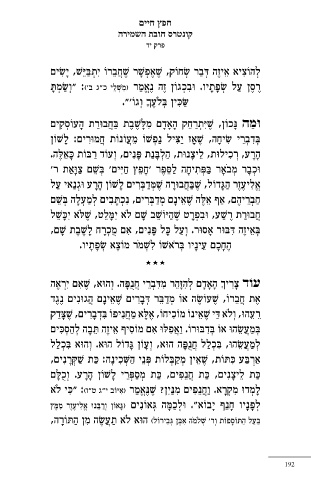
 provokes anger in the world, as the pasuk states (Eyov 36:13)    םיִשָׂי ,שֵׁיַּבְּתִי וֹרֵבֲחֶשׁ רָשְׁפֶאֶשׁ ,קוֹחְשׂ רַבְדּ הֶזיֵא איִצוֹהְל
 “The flattering of the heart will provoke anger,” and more than
 that, this person’s prayers will not be answered.  Furthermore,    ָתְּמַשְׂו" :)'ב ג"כ יֵלְשִׁמ( רַמֱאֶנ הֶז ןוֹגְכִבוּ .ויָתָפְשׂ לַע ןֶסרֶ
 Rebbe  Elazar  said  – Whoever  possesses  the  character  trait  of   ."'וֹגְו ךֶָעלְֹבּ ןיִכַַּ ּשּׂ
 flattery causes the fetuses in their mother’s wombs to curse him, as
 the pasuk states (Mishle 24:24) “One who says to the Rasha ‘You    םיקְִסוֹעָה תרַוּבֲחַבּ תֶבֶשָׁלִּמ םָדָאָה קֵחרְַתִיֶּשׁ ,ןוֹכָנּ הַמוּ
 are a Tzadik,’ people will curse him (Yekivuhu) and the nations
 (Le’umim) will be angry at him” [The word ‘Yekivuhu’ comes    ןוֹשָׁל :םירִוּמֲח תוֹנוֲֹעֵמ וֹשְׁפַנ ליִצַּי זָאֶשׁ ,הָחיִשׂ ירְֵבדְִבּ
 from  the  root  word  ‘Kov’  and  ‘Leumim”  from  the  root  word
 ‘Leum’] and everywhere the word “Kov” is used, the meaning is    .הֶלֵּאָכּ תוֹבּרַ דוֹעְו ,םיִנָפּ תַנָבְּלַה ,תוּנָציֵל ,תוּליִכרְ ,ערָָה
 “curse,” as is written in the pasuk (Bamidbar 23:8) “that Hashem    'ר תַאָוַּצ םֵשְׁבּ 'םיִיַּח ץֵפָח' רֶפֵסַּל הָחיִתְפַּבּ רָאֹבְמ רָבְכוּ
 did not curse” and the word “Leum”  means “fetuses,” as it says
 (Beresheet 25:23) “and one nation (Leum) from the other will    לַע יאַנְגוּ ערָָה ןוֹשָׁל םירְִבּדְַמֶּשׁ הרָוּבֲחַבֶּשׁ ,לוֹדָגַּה רֶזֶעיִלֱא
 take strength.” [The pasuk is referring to the nations that will    םֵשְׁבּ הָלְעַמְל םיִבָתְּכִנ ,םירְִבּדְַמ םָניֵאֶשׁ הֶלֵּא ףַא ,םֶהירְֵבַח
 descend from Yaakov and Eisav – who at that time were fetuses in
 their mother’s womb].  Moreover, Rebbe Elazar said that whoever    לֵשָׁכִּי אלֶֹּשׁ ,טֵלָמִּי אלֹ םָשׁ בֵשׁוֹיַּהֶשׁ טרְָפִבוּ ,עַשׁרֶ תרַוּבֲח
 possesses the character trait of flattery will fall into Gehinnom.     ,םָשׁ תֶבֶשָׁל חרְָכֻמ םִא ,םיִנָפּ לָכּ לַעְו .רוּסָא רוּבִּדּ הֶזיֵאְבּ
 Please  see  that  reference  in  the  gemara  for  more  astounding
 statements regarding this subject.   Therefore, one who wants to   .ויָתָפְשׂ אָצוֹמ רֹמְשִׁל וֹשׁארְֹבּ ויָניֵע םָכָחֶה
 protect his soul will stay very far away from this.
                                        ש ש ש
 The subject of “lies” is explained in the essay “Sfat Tamim,” in
 the end of the 6  perek with all of the details that pertain to this    הֶארְִי םִאֶשׁ ,אוּהְו .הָפֻּנֲח ירְֵבִדִּמ רֵהָזִּהְל םָדָאָה ךְירִָצ דוֹע
 th
 subject. 43
 The  subject  of  “conflict  \  controversy”  is  explained  in  Sefer    דֶגֶנ םיִנוּגֲה םָניֵאֶשׁ םירִָבְדּ רֵבּדְַמ וֹא הֶשׂוֹעֶשׁ ,וֹרֵבֲח תֶא
 th
 Shemirat HaLashon, Sha’ar HaZechirah, the 15 , 16  and 17     קדַָצֶּשׁ ,םירִָבדְִבּ וֹפיִנֲחַמ אָלֶּא ,וֹחיִכוֹמ וֹניֵאֶשׁ יַדּ אלְֹו ,וּהֵערֵ
 th
 th
 chapters with all of the details that pertain to this category of
 esur.         םיִכְּסַהְל הָבֵתּ הֶזיֵא ףיִסוֹמ םִא וּלִּפֲאַו .וֹרוּבּדְִבּ וֹא וּהֵשֲׂעַמְבּ
 Regarding the subject of mockery \ scoffing \ ridiculing, please    לַלְכִבּ אוּהְו .אוּה לוֹדָגּ ןוָֹעְו ,אוּה הָפֻּנֲח לַלְכִבּ ,וּהֵשֲׂעַמְל
 rd
 see Sefer Shaare Teshuvah by Rabbeinu Yonah (3  sha’ar) from    ,םיִנרְָקַּשׁ תַכּ :הָניִכְשַּׁה יֵנְפּ תוֹלְבּקְַמ ןיֵאֶשׁ ,תוֹתִּכּ עַבּרְַא
               םָלֻּכְו .ערָָה ןוֹשָׁל ירְֵפַּסְמ תַכּ ,םיִפֵנֲח תַכּ ,םיִנָציֵל תַכּ
 43.  Quoting in part from the beginning of the 6th perek of the Mazal Elul
 English translation of the Chafetz Chayim’s ZT”L Kuntres Sfat Tamim:     אלֹ יִכּ" :)ז"ט ג"י בוֹיִּא( רַמֱאֶנֶּשׁ ?ןִיַנִּמ םיִפֵנֲחַו .ארָקְִמ וּדְמָל
 And now we will begin the topic begun in the third perek, that one who
 wants to save himself from the sin of deceit should constantly think deeply    ץֶמִּמ רֶזֶעיִלֱא וּנֵבּרְַו ןוֹאָגּ( םיִנוֹאְגּ הָמַּכְלוּ ."אוֹבָי ףֵנָח ויָנָפְל
 about the sin of lying and in so doing he will additionally be saved from the
 sin of deceiving.  I will address you and say (emphatically) how much a man   ,הרָוֹתַּה ןִמ הֶשֲׂעַת אלֹ אוּה )לוֹריִבְגּ ןְבִּא הֹמלְֹשׁ 'רְו תוֹפָסוֹתַּה לַעַבּ


 201                                                                          192

