


Page 208 - 72193
P. 208
212
 החיתפ
                                              th
 םייח ץפח
 Chafetz Chayim  םימש דובכ סרטנוק   ערָ רָב ּ ָד :)'ג אֵצֵת תַשׁרָ ּ ָפ אָמוּחְנ ּ ַת( ל"ַזֲח וּרְמָאְו ."ערָ רָב ּ ָד   ל ּ ֹכִמ  ּ ָתרְַמְשִׁנְו ךָיֶבְיוֹא לַע הֶנֲחַמ אֵצֵת י ּ ִכ" :)'י ג"כ םירִָב ּ דְ(   םיִטְפֹשׁ  תַשׁרָָפְבוּ  .םָדוֹב ּ ְכ  לַע  שָׁח  אלְֹו  ,הָלוֹדּ ְג  תוּכירֲִא ּ ַב   שׁוּרֵפ ּ ְב םרָי ּ ִכְזִה ,םיִלּ ְגר
  Kuntres Chovat HaShemirah      הרימשה תבוח סרטנוק
 14  chapter                            די קרפ
 th
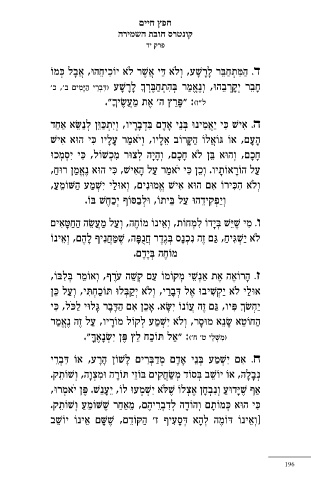
 [ 4 ] One who forms a friendship with an evil person.  It is not    וֹמְכּ לָבֲא ,וּהֵחיִכוֹי אלֹ רֶשֲׁא יַדּ אלְֹו ,עָשׁרָָל רֵבַּחְתִמַּה .ד
 enough that one did not rebuke this evil person but that he now
 associates with him as a friend.  Regarding this, the pasuk states    'כ ,'ב םיִמָיַּה ירְֵבִדּ( עָשׁרָָל ךָרְֶבַּחְתִהְבּ רַמֱאֶנְו ,וּהֵברְקְָי רֵבָח
 (Divrei HaYamim II 20:37) “Because you allied yourself with a
 Rasha, Hashem has destroyed your actions.”    ."ךָיֶשֲׂעַמ תֶא 'ה ץרַָפּ" :)ז"ל

 [ 5 ]  A person who is trusted by society wants to promote a friend    דַחַא אֵשַּׂנְל ןֵוַּכְּתִיְו ,וירָָבדְִבּ םָדָא יֵנְבּ וּניִמֲאַי יִכּ שׁיִא .ה
 or a relative, and this person tells people that he is wise, and
 in reality he is not wise.  This now becomes a problem and the    שׁיִא אוּה יִכּ ויָלָע רַמאֹיְו ,ויָלֵא בוֹרָקַּה וֹלֲאוֹגּ וֹא ,םָעָה
 cause for making mistakes because people believe his opinion.     וּכְמְסִי יִכּ ,לוֹשְׁכִמ רוּצְל הָיָהְו ,םָכָח אלֹ ןֵבּ אוּהְו ,םָכָח
 So too if a person says that so-and-so is trustworthy when in fact
 he has no knowledge of him, perhaps people will listen to this    ,ַחוּר ןַמֱאֶנ אוּה יִכּ ,שׁיִאָה לַע רַמאֹי יִכּ ןֵכְו .ויָתוֹארָוֹה לַע
 person and appoint so-and-so to manage their affairs and in the    ,ַעֵמוֹשַּׁה עַמְשִׁי יַלוּאְו ,םיִנוּמֱא שׁיִא אוּה םִא וֹריִכִּה אלְֹו
 end they will be ruined because of him.
                        .וֹבּ שֶׁחַכְי ףוֹסַּבְלוּ ,וֹתיֵבּ לַע וּהדֵיקְִפַיְו
 [ 6 ] Someone who has the ability to reprimand someone else
 and  does  not,  and  ignores  the  actions  of  sinners,  this  also  is
 included in the realm of flattery, since he flatters this person by    םיִאָטַּחַה הֵשֲׂעַמ לַעְו ,הֶחוֹמ וֹניֵאְו ,תוֹחְמִל וֹדָיְבּ שֵׁיֶּשׁ יִמ .ו
 not expressing an objection to his actions.   וֹניֵאְו ,םֶהָל ףיִנֲחַמֶּשׁ ,הָפֻּנֲח רדֶֶגְבּ סָנְכִנ הֶז םַגּ ,ַחיִגְּשַׁי אלֹ

 [ 7 ] Someone who sees that the people in his community are   .םָדָיְבּ הֶחוֹמ
 obstinate and says to himself “Maybe they won’t listen to what
 I’m telling them and they won’t accept my rebuke” and so he    ,וֹבִּלְבּ רֵמוֹאְו ,ףרֶֹע הֵשׁקְ םַע וֹמוֹקְמ יֵשְׁנַא תֶא הֶאוֹרָה .ז
 keeps his mouth closed, this person is also culpable for bringing
 his sin onto himself.  However, if it is common public knowledge    ןֵכּ לַעְו ,יִתְּחַכוֹתּ וּלְבּקְַי אלְֹו ,ירַָבְדּ לֶא וּביִשׁקְַי אלֹ יַלוּא
 that this sinner despises mussar and won’t listen to the voice of
 instruction, regarding this, Shelomo HaMelech writes in Mishle    יִכּ ,ל ֹּכַל יוּלָגּ רָבָדַּה םִא ןֵכָא .אָשִּׂי וֹנוֲֹע הֶז םַגּ ,ויִפּ ךְשְׂחַי
 (9:8) “Do not rebuke a scoffer \ mocker because he might come    רַמֱאֶנ הֶז לַע ,וירָוֹמ לוֹקְל עַמְשִׁי אלְֹו ,רָסוּמ אֵנָשׂ אֵטוֹחַה
 to hate you.”

 [ 8 ] If someone hears people speaking Lashon Hara or vile words,   ."ָךֶּאָנְשִׂי ןֶפּ ץֵל חַכוֹתּ לַא" :)'ח 'ט יֵלְשִׁמ(
 or is sitting among gamblers who insult the Torah and mitzvot,    ירְֵבִדּ וֹא ,ערָָה ןוֹשָׁל םירְִבּדְַמ םָדָא יֵנְבּ עַמְשִׁי םִא .ח
 and  he  remains  quiet,  even  though  he  knows  by  experience
 that they won’t listen to him, nevertheless he will be punished,    .קֵתוֹשְׁו ,הָוְצִמוּ הרָוֹתּ יֵזוֹבּ םיקֲִחַשְׂמ דוֹסְבּ בֵשׁוֹי וֹא ,הָלָבְנ
 because people will say that he is just like them and that he agrees
 with what they say, since he heard them and said nothing.  (This    ,וּרְמאֹי ןֶפּ .שֵׁנָעֵי ,וֹל וּעְמְשִׁי אלֶֹּשׁ וֹלְצֶא ןָחְבִנְו ַעוּדָיֶּשׁ ףַא
 is not comparable to what I wrote in the immediately preceding    .קֵתוֹשְׁו ַעֵמוֹשֶּׁשׁ רַחַאֵמ ,םֶהירְֵבדְִל הָדוֹהְו םָתוֹמְכּ אוּה יִכּ
 seventh rule, because there he was not associating with them).
 This person is obliged to answer them back and to be angry (to    בֵשׁוֹי  וֹניֵא  םָשֶּׁשׁ  ,םדֵוֹקַּה  'ז  ףיִעָסְדּ  אָהְל  הֶמוֹדּ  וֹניֵאְו[


 197                                                                          196

