


Page 210 - 72193
P. 210
182
 ש ש ש
 .וֹנוֹשְׁל
 די קרפ
                                              Preface
 םייח ץפח
 Chafetz Chayim  הרימשה תבוח סרטנוק  .דֹאְמ וֹז הָדִּמִּמ קֵחרְַתִהְל  .ל"ַנַּה לָכְבּ לֵשָׁכִּי ןַמְזַּה ךְֵשְׁמֶהְבּ   ידֵיִל םָדָאָה תֶא הָאיִבְמוּ ,דֹאְמ הָערָ הָדִּמ איִה םַגּ הָוֲאַגַּה   .הָוֲאַגּ רַבְדּ ויִפִּמ אֵצֵי אלֶֹּשׁ ,תוּריִהְזַּה תוֹדוֹא רֵבּדְַנ הָתַּעְו   ןאָכּ דַע ,הָבוֹטַּה ךְרֶֶדּ איִה וֹזְו ,םיִסיִעְכַמַּה ם
  Kuntres Chovat HaShemirah      הרימשה תבוח סרטנוק
 th
 14  chapter                            די קרפ
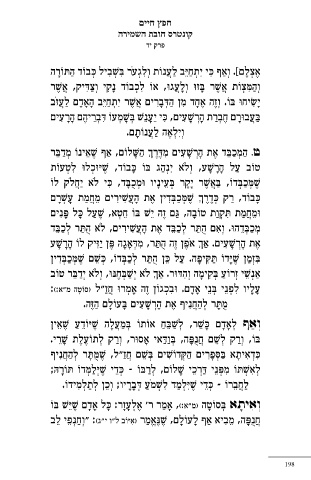
 the Torah (Bamidbar 35:33) “and the land shall not be (corrupted    הרָוֹתַּה דוֹבְכּ ליִבְשִׁבּ רֹעְגִלְו תוֹנֲעַל בֵיַּחְתִי יִכּ ףַאְו .]םָלְצֶא
 by) flattery.”   The Sifri commentary identifies this pasuk  as a
 warning against flattery.  Please see the Sefer Shaare Teshuvah    רֶשֲׁא ,קיִדַּצְו יקִָנ דוֹבְכִל וֹא ,וּגֲעָלְו וּזָבּ רֶשֲׁא תוְֹצִמַּהְו
 by  Rabbeinu  Yonah  (3   sha’ar,  sections  #187-200)  where  he    בֹזֲעַל םָדָאָה בֵיַּחְתִי רֶשֲׁא םירִָבְדַּה ןִמ דָחֶא הֶזְו .וֹבּ וּחיִשָׂי
 rd
 extensively  elaborated  on  this  subject.    In  his  explanation,
 Rabbeinu Yonah  divided  this  subject  into  several  parts,  all  of    םיִערָָה םֶהירְֵבִדּ וֹעְמָשְׁבּ שֵׁנָעֵי יִכּ ,םיִעָשׁרְָה תרְַבֶח םרָוּבֲעַבּ
 which are inclusive of flattery and he identified their sources in   .םָתוֹנֲעַל הֶאְלִיְו
 our Holy Writings; however, I wish to briefly summarize all of
 this as follows:   רֵבּדְַמ וֹניֵאֶשׁ ףַא ,םוֹלָשַּׁה ךְרֶֶדִּמ םיִעָשׁרְָה תֶא דֵבַּכְמַה .ט
 [ 1 ]  The circumstance we have just described above.
               תוֹעְטִל  וּלְכוּיֶּשׁ  ,דוֹבָכּ  וֹבּ  גַהְנִי  אלְֹו  ,עָשׁרָָה  לַע  בוֹט
 [ 2 ]  One who praises an evil person to others whether or not this    וֹל קלֲֹחַי אלֹ יִכּ ,דָבֻּכְמוּ ויָניֵעְבּ רקָָי רֶשֲׁאַבּ ,וֹדְבַּכְמֶּשׁ
 evildoer is present to hear the praise, even though the speaker
 does not justify his thievery but merely says that he is a “good    םרְָשָׁע תַמֲחֵמ םירִיִשֲׁעָה תֶא ןידְִבַּכְמֶּשׁ ךְרֶדְֶכּ קרַ ,דוֹבָכּ
 man.”    Regarding  this  type  of  speech,  Shelomo  HaMelech    םיִנָפּ לָכּ לַעֶשׁ ,אְטֵח וֹבּ שֵׁי הֶז םַגּ ,הָבוֹט תַוקְִתּ תַמֲחֵמוּ
 teaches in Mishle (28:4) “One who leaves the Torah will extol \
 praise evil people.”  Even if the speaker is careful not to praise    דֵבַּכְל רַתֻּה אלֹ ,םירִיִשֲׁעָה תֶא דֵבַּכְל רַתֻּה םִאְו .וּהדְֵבַּכְמ
 this evil person except for those good qualities that he actually    עָשׁרָָה וֹל קיִזַּי ןֶפּ הָגָאְדִּמ ,רַתֻּה הֶז ןֶפֹא ךְַא .םיִעָשׁרְָה תֶא
 does possess and advocates for him before others, this is also a
 bad sickness because when someone recalls the “good” and not    ןידְִבַּכְמֶּשׁ םֵשְׁכּ ,וֹדְבַּכְל רַתֻּה ןֵכּ לַע .הָפיִקַּתּ וֹדָיֶּשׁ ןַמְזִבּ
 the “bad,” and cover up his sins, he will be considered as being
 righteous in the minds of the listeners and they will extend to him    בוֹט רֵבּדְַי אלְֹו ,וּנֶּחְבַּשְׁי אלֹ ךְַא .רוּדִּהְו הָמיקְִבּ ַעוֹרְז יֵשְׁנַא
 honor and deference, and this evil person’s hand will be uplifted    :):א"מ הָטוֹס( ל"ַזֲח וּרְמָא הֶז ןוֹגְכִבוּ .םָדָא יֵנְבּ יֵנְפִל ויָלָע
 and  he  will  become  strong.    We  have  already  described  the
 enormity of the trap of giving honor to Resha’im.  Therefore, it is   .הֶזַּה םָלוֹעָבּ םיִעָשׁרְָה תֶא ףיִנֲחַהְל רָתֻּמ
 not appropriate to mention the “good” that evil people do unless
 one also mentions the “bad” they do and their foolishness.   ןיֵאֶשׁ  ַעדֵוֹיֶּשׁ  הָלֲעַמְבּ  וֹתוֹא  ַחֵבַּשְׁל  ,רֵשָׁכּ  םָדָאְל  ףַאְו

 [ 3 ] One who praises an evil person directly in his presence, even    .ירֵָשׁ תֶלֶעוֹתְל קרְַו ,רוּסָא יאַדַּוְבּ ,הָפֻּנֲח םֵשְׁל קרְַו ,וֹבּ
 though one is careful not to express that praise to others so that    ףיִנֲחַהְל רָתֻּמֶּשׁ ,ל"ַזֲח םֵשְׁבּ םיִשׁוֹדְקַּה םירִָפְסַּבּ אָתיִאדְִכּ
 they won’t fall into a trap, nevertheless this speaker is called a
 flatterer and his sin is very great.  His sin is great because this evil    ;הּרָוֹתּ וֹדְמַּלְיֶּשׁ ידְֵכּ - וֹבּרְַל ,םוֹלָשׁ יֵכרְַדּ יֵנְפִּמ וֹתְּשִׁאְל
 person now thinks the speaker respects him (lit., “has smoothed   .וֹדיִמְלַתְל ןֵכְו ;וירָָבְדּ ַעֹמְשִׁל דַמְלִיֶּשׁ ידְֵכּ - וֹרֵבֲחַל
 out the path of this evil person in his own eyes” – Tehilim 36:3)
 and consequently he will not repent from his evil lifestyle nor    וֹבּ שֵׁיֶּשׁ םָדָא לָכּ :רָזָעְלֶא 'ר רַמָא ,):א"מ( הָטוֹסְבּ אָתיִאְו
 will he be troubled about his sins, since he sees himself as being
 righteous in the esteem of the speaker.   בֵל יֵפְנַחְו" :)ג"י ו"ל בוֹיִּא( רַמֱאֶנֶּשׁ ,םָלוֹעָל ףַא איִבֵמ ,הָפֻּנֲח


 195                                                                          198

