


Page 266 - 72193
P. 266
270
 ְ
  .ת ֶ קֹל ֲ ח ַ מ ְּ ב
 ָ
 ָ
 ָ
 ָ
 הליפת
                                              nd
 םייח ץפח
 Chafetz Chayim   ."ב ָ ׁ שָי אֹל םי ִ צ ֵ ל  ָ  הרימשה תבוח סרטנוק   ."ב ֵ ל  ּ ה ַ ב ְּג ל ָּ כ 'ה ת ַ ב ֲ עֹו ּ ת"   ."ּופיִנ ֲ ח ַ ת אֹל ְ ו" :י ֵ ע ְ ס ַ מ ת ַ ׁ ש ָ ר ָ פ ְּ ב בי ִ ת ְ כ ִּ ד     .םִי ַ מ ָ ׁ ש ם ֵ ׁ ש ְ ל י ַ רּו ּ ב ִ ד ְ ו י ַׂש ֲ ע ַ מ ל ָּ כ ּוי ְ הִּי ֶ ׁ ש ְ ו  .םי ִ רּוס ֲ א םי ִ רּו ּ ב ִּ ד ר ָ א ְ
  Kuntres Kevod Shamayim          םימש דובכ סרטנוק
 th
 4  chapter                              ב קרפ
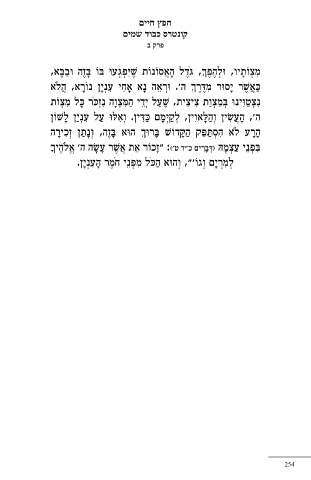
 of even only one year, it amounts to about seven hundred times    ,א ָּבַבוּ הֶז ָּב וֹבּ וּעְּגְפִּיֶשׁ תוֹנוֹסֲאָה לדֶֹּג ,ךְֶפֶהְלוּ ,ויָתוְֹצִמ
 that he recited this Tefilah without (completely) accepting upon
 himself the responsibility to observe the mitzvot as the halacha    אלֲֹה ,ארָוֹנ ןָיְנִע יִחָא אָנ הֵארְוּ .'ה ךְרֶ ּדִֶמ רוּסָי רֶשֲׁא ַּכ
 requires.
               תוְֹצִמ ל ָּכ ר ֹּכְזִנ הָוְצ ִּמַה ידְֵי לַעֶשׁ ,תיִציִצ תַוְצִמ ְּב וּניִּוַטְצִנ
 Chazal  have  said  (Yerushalmi  Shabbat  39a)  in  explanation  of    ןוֹשָׁל ןַיְנִע לַע וּלִּאְו .ןי ּדִ ַּכ םָמְּיקְַל ,ןיִוא ָּלַהְו ןיִשֲׂעָה ,'ה
 the  pasuk  (Midrash  Rabbah  Vayikrah  40)  “Who  toiled  with
 Hashem,” that in the future a heavenly voice will thunder from    הרָיִכְז  ןַתָנְו  ,הֶז ָּב  אוּה  ךְוּר ָּב  שׁוֹד ּקַָה  ק ֵּפ ַּתְסִה  אלֹ  ערָָה
 the  summits  of  mountains  calling  out  “Whoever  toiled  with
 Hashem  (to  fulfill  His  mitzvot)  should  come  and  collect  their    ךָיֶהלֱֹא 'ה הָשָׂע רֶשֲׁא תֵא רוֹכָז" :)'ט ד"כ םירִָב ּדְ( הָּמְצַע יֵנְפ ִּב
 reward.”  Without a doubt, this heavenly voice will gladden the   .ןָיְנִעָה רֶמֹח יֵנ ְּפִמ ל ֹּכַה אוּהְו ,"'וֹגְו םָירְִמְל
 heart of every Jew, when they hear that the time has come to
 receive their reward.  The totality of all of the mitzvot performed
 by Israel will be written in the Book of Remembrance, as Chazal
 teach in Gemara Berachot (6) and in Midrash Ruth (5  perek),
 th
 that every night following the Shabbat the prophet Eliyahu sits
 together with the King Mashiach under the Tree of Life in Gan
 Eden.   They  write  down  the  mitzvot  performed  by  Israel  and
 HaKadosh Baruch Hu signs their statement (attesting to its truth).
 This is what is written (Malachi 3:16) “before Him in the Book
 of Remembrance for those who fear Hashem and are concerned
 about the sanctity of His Name.”  All of this takes place in the
 World of Truth and the mitzvah is precisely recorded based on
 how the mitzvah was performed, for the sake of Heaven and not
 for any reasons of pride or publicity.  And with certainty, among
 those mitzvot will be the mitzvat Aseh of the acceptance of the
 supreme authority of Hashem’s Majesty and the acceptance of
 the responsibility to perform His mitzvot if they were done as the
 halacha proscribes.
 Thus, it is very appropriate and truth demands that one should
 study  the  book  of  Hashem’s  mitzvot,  and  nowadays  (it  has
 become even easier, since) Chumashim have been printed listing
 all of the mitzvot.  At the very least one should learn once the list
 of all of the mitzvot, and then learn them again as they appear in
 each perasha, and in so doing when one says in his Tefilah “and
 you shall listen,” he will know what are the mitzvot of Hashem
 in order to accept upon himself to perform them.


 267                                                                          254

