


Page 96 - 72193
P. 96
68
 'ה קרֶֶפּ
 ה קרפ
                                              th
 םייח ץפח
 Chafetz Chayim  .םיִנָיְנִע הָמַּכּ דוֹעְו  הרימשה תבוח סרטנוק   ,הָלְעַמְל תוּכְז ויָלָע ןידְִמַּלְמ ,וֹרֵבֲח לַע בוֹט רֵבּדְַמֶּשְׁכּ   ,ךְֶפֶהְלוּ .הָבוֹח ויָלָע ןידְִמַּלְמ תרֵָשַּׁה יֵכֲאְלַמוּ ,הָלְעַמְל   ןיִדַּה ויָלָע ררֵוֹעְתִמ ןוֹשָׁלַּה אְטֵח ידְֵי לַעֶשׁ ,רַאֹבְי וֹבּ   שֶׁנֹעָה ויָלָע לָח ףֶכֵתְו ,ץרֶָאְל ץוּחְל ץרֶ
  Kuntres Chovat HaShemirah      הרימשה תבוח סרטנוק
 2  chapter                              ו קרפ
 nd
 3
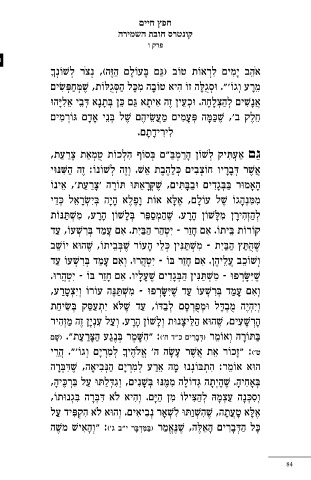
 upon himself the obligation to guard his speech and it will be    ךְָנוֹשְׁל רֹצְנ ,)הֶזַּה םָלוֹעָבּ םַגּ( בוֹט תוֹארְִל םיִמָי בֵהֹא
 good for him in this world and in Olam Haba.
 Moreover, a wise person should think carefully that there are many    םיִשְׂפַּחְמֶּשׁ ,תוֹלֻּגְסַּה לָכִּמ הָבוֹט איִה וֹז הָלֻּגְסוּ ."'וֹגְו ערֵָמ
 profound laws in the Torah that are alluded to in a given pasuk    וּהָיִּלֵא יֵבְדּ אָנָתְבּ ןֵכּ םַגּ אָתיִא הֶז ןיֵעְכוּ .הָחָלְצַהְל םיִשָׁנֲא
 or word (in the Torah), but regarding the power of one’s speech    םיִמרְוֹגּ םָדָא יֵנְבּ לֶשׁ םֶהיֵשֲׂעַמ םיִמָעְפּ הָמַּכֶּשׁ ,'ב קֶלֵח
 (for good or for bad) that man must not ruin his mouth with any
 speech that is forbidden, the text of the Torah repeats and again   .םָתָדירִיִל
 repeats over again many parshyot that address this subject.  From
 this (from the emphasis the Torah places on avoiding forbidden    ,תַערַָצ תַאְמֻט תוֹכְלִה ףוֹסְבּ ם"ַבְּמרַָה ןוֹשְׁל קיִתְּעַא םַגּ
 speech) one can understand the profound obligation to discipline
 one’s speech.   יוּנִּשַּׁה הֶז :וֹנוֹשְׁל הֶזְו .שֵׁא תֶבֶהַלְכּ םיִבְצוֹח וירָָבְדּ רֶשֲׁא
 (Our sages of blessed memory have taught us (Beresheet Rabbah    וֹניֵא ,'תַערַָצ' הרָוֹתּ וּתַּארְָקֶּשׁ ,םיִתָּבַּבוּ םידִָגְבַּבּ רוּמָאָה
 60:11) that the conversations of the servants of our forefathers are
 more pleasing (to Hashem) than the Torah learning of the sons.     ידְֵכּ לֵארְָשִׂיְבּ הָיָה אֶלֶפָו תוֹא אָלֶּא ,םָלוֹע לֶשׁ וֹגָהְנִמִּמ
 They  learn  this  concept  from  the  fact  that  the Torah  reported    תוֹנַּתְּשִׁמ ,ערָָה ןוֹשָׁלְבּ רֵפַּסְמַהֶשׁ .ערָָה ןוֹשָׁלִּמ ןרָיִהְזַהְל
 and then repeated again the entire conversation of Eliezer (with
 Lavan).  But regarding the Torah of the sons, the Torah relates    דַע ,וֹעְשׁרְִבּ דַמָע םִא .תִיַבַּה רַהְטִי - רַזָח םִא .וֹתיֵבּ תוֹרוֹק
 it very succinctly.  So too can we say regarding our topic, since    בֵשׁוֹי אוּהֶשׁ ,וֹתיֵבְבֶּשׁ רוֹעָה יֵלְכּ ןיִנַּתְּשִׁמ - תִיַבַּה ץַתֻּהֶשׁ
 the Torah emphasized in many different parshyot the subject of
 one’s  speech,  namely  Lashon  Hara  and  Rechilut,  slander  and    דַע וֹעְשׁרְִבּ דַמָע םִאְו .וּרֲהְטִי - וֹבּ רַזָח םִא .ןֶהיֵלֲע בֵכוֹשְׁו
 oppressive language, embarrassment and lies, haughtiness and    .וּרֲהְטִי - וֹבּ רַזָח םִא .ויָלָעֶשׁ םידִָגְבַּה ןיִנַּתְּשִׁמ - וּפרְָשִּׂיֶּשׁ
 flattery (manipulative language) and language that incites strife,
 mockery and scoffing (most certainly this is all inclusive of the    ,ערַָטְצִיְו וֹרוֹע הֶנַּתְּשִׁמ - וּפרְָשִּׂיֶּשׁ דַע וֹעְשׁרְִבּ דַמָע םִאְו
 intent of the text (Devarim 6:7) “and you shall speak them” (i.e.,    תַחיִשְׂבּ  קֵסַּעְתִי  אלֶֹּשׁ  דַע  ,וֹדַּבְל  םָסרְֻפְמוּ  לָדְּבֻמ  הֶיְהִיְו
 words of Torah) and regarding this, Chazal have said (Gemara
 Yomah 19b) “(words of Torah) and not words that are nonsense).     ריִהְזַמ הֶז ןָיְנִע לַעְו .ערָָה ןוֹשָׁלְו תוּנָציֵלַּה אוּהֶשׁ ,םיִעָשׁרְָה
 From the fact that we do not find this emphasis on any other    םָשׁ( ."תַערַָצַּה עַגֶנְבּ רֶמָשִּׁה" :)'ח ד"כ םירִָבְדּ( רֵמוֹאְו הרָוֹתַּבּ
 subject in the Torah we can realize the enormity of this subject
 of the power of one’s speech.  Praiseworthy is the share of the    ירֲֵה ."'וֹגְו םָירְִמְל ךָיֶהלֱֹא 'ה הָשָׂע רֶשֲׁא תֵא רוֹכָז" :)'ט
 person who is careful in these laws.)
               הרְָבִּדֶּשׁ ,הָאיִבְנַּה םָירְִמְל ערֵַא הָמ וּנְנוֹבְּתִה :רֵמוֹא אוּה
               ,ָהיֶכּרְִבּ לַע וּתַּלְדִּגְו ,םיִנָשְׁבּ וּנֶּמִּמ הָלוֹדְגּ הָתְיָהֶשׁ .ָהיִחָאְבּ

               ,וֹתוּנְגִבּ הרְָבִּדּ אלֹ איִהְו .םָיַּה ןִמ וֹליִצַּהְל הָּמְצַע הָנְכִּסְו
               לַע דיִפּקְִה אלֹ אוּהְו .םיִאיִבְנ רָאְשִׁל וּתַּוְשִׁהֶשׁ ,הָתֲעָט אָלֶּא

               הֶשׁמ שׁיִאָהְו" :)'ג ב"י רָבּדְִמַּבּ( רַמֱאֶנֶּשׁ ,הֶלֵּאָה םירִָבְדַּה לָכּ


 53  56  ג קרפ  םייח ץפח  .)'ט ד"כ םירִָבְדּ(  הרימשה תבוח סרטנוק  .הָוְצִמ הֵשׂוֹעְכּ רָכָשׂ וֹל םיִנְתוֹנ  Elul (Distributed by Feldheim Publishers, 5769).  LeMiryam which has been translated into English under the title Mazal   18.  This subject is elaborated in the Chafetz Chayim’s ZT”L Kuntres Zachor    רָבָדּ הֶזיֵא לַע ַעֵג

