


Page 27 - Pharmaceutics III_ 02-06-01304_Fall 2025_ Pharm D_Electronic book
P. 27
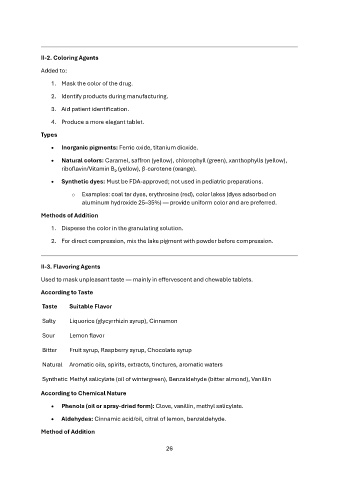
II-2. Coloring Agents
Added to:

    1. Mask the color of the drug.
    2. Identify products during manufacturing.
    3. Aid patient identification.
    4. Produce a more elegant tablet.
Types
    • Inorganic pigments: Ferric oxide, titanium dioxide.
    • Natural colors: Caramel, saffron (yellow), chlorophyll (green), xanthophylls (yellow),

         riboflavin/Vitamin B₂ (yellow), β-carotene (orange).
    • Synthetic dyes: Must be FDA-approved; not used in pediatric preparations.

              o Examples: coal tar dyes, erythrosine (red), color lakes (dyes adsorbed on
                   aluminum hydroxide 25–35%) — provide uniform color and are preferred.

Methods of Addition
    1. Disperse the color in the granulating solution.
    2. For direct compression, mix the lake pigment with powder before compression.

II-3. Flavoring Agents
Used to mask unpleasant taste — mainly in effervescent and chewable tablets.
According to Taste
Taste Suitable Flavor
Salty Liquorice (glycyrrhizin syrup), Cinnamon
Sour Lemon flavor
Bitter Fruit syrup, Raspberry syrup, Chocolate syrup
Natural Aromatic oils, spirits, extracts, tinctures, aromatic waters
Synthetic Methyl salicylate (oil of wintergreen), Benzaldehyde (bitter almond), Vanillin
According to Chemical Nature

    • Phenols (oil or spray-dried form): Clove, vanillin, methyl salicylate.
    • Aldehydes: Cinnamic acid/oil, citral of lemon, benzaldehyde.
Method of Addition

                                                            26

