


Page 23 - phytotherapy_ EBOOK_2025
P. 23
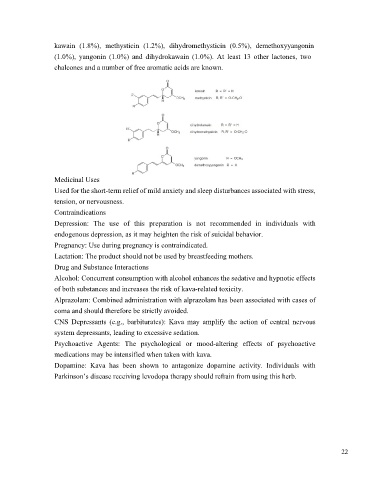
kawain (1.8%), methysticin (1.2%), dihydromethysticin (0.5%), demethoxyyangonin
(1.0%), yangonin (1.0%) and dihydrokawain (1.0%). At least 13 other lactones, two
chalcones and a number of free aromatic acids are known.

Medicinal Uses
Used for the short-term relief of mild anxiety and sleep disturbances associated with stress,
tension, or nervousness.
Contraindications
Depression: The use of this preparation is not recommended in individuals with
endogenous depression, as it may heighten the risk of suicidal behavior.
Pregnancy: Use during pregnancy is contraindicated.
Lactation: The product should not be used by breastfeeding mothers.
Drug and Substance Interactions
Alcohol: Concurrent consumption with alcohol enhances the sedative and hypnotic effects
of both substances and increases the risk of kava-related toxicity.
Alprazolam: Combined administration with alprazolam has been associated with cases of
coma and should therefore be strictly avoided.
CNS Depressants (e.g., barbiturates): Kava may amplify the action of central nervous
system depressants, leading to excessive sedation.
Psychoactive Agents: The psychological or mood-altering effects of psychoactive
medications may be intensified when taken with kava.
Dopamine: Kava has been shown to antagonize dopamine activity. Individuals with
Parkinson’s disease receiving levodopa therapy should refrain from using this herb.

                                                                                                                                  22

