


Page 48 - phytotherapy_ EBOOK_2025
P. 48
Excretion of the drug into breast milk and its effects on the newborn have not been
established. Until such data are available, the drug should not be used during lactation
except on medical advice.

                           German Chamomile

Definition
It consists of the dried flowering heads of Chamomilla recutita (L.) Rauschert (Matricaria
chamomilla L.) (Asteraceae).
Chemical constituents
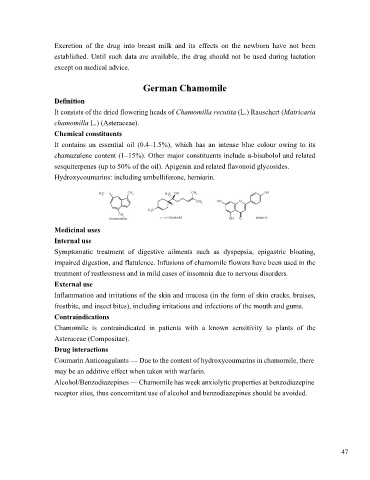
It contains an essential oil (0.4–1.5%), which has an intense blue colour owing to its
chamazulene content (1–15%). Other major constituents include α-bisabolol and related
sesquiterpenes (up to 50% of the oil). Apigenin and related flavonoid glycosides.
Hydroxycoumarins: including umbelliferone, herniarin.

Medicinal uses
Internal use
Symptomatic treatment of digestive ailments such as dyspepsia, epigastric bloating,
impaired digestion, and flatulence. Infusions of chamomile flowers have been used in the
treatment of restlessness and in mild cases of insomnia due to nervous disorders.
External use
Inflammation and irritations of the skin and mucosa (in the form of skin cracks, bruises,
frostbite, and insect bites), including irritations and infections of the mouth and gums.
Contraindications
Chamomile is contraindicated in patients with a known sensitivity to plants of the
Asteraceae (Compositae).
Drug interactions
Coumarin Anticoagulants — Due to the content of hydroxycoumarins in chamomile, there
may be an additive effect when taken with warfarin.
Alcohol/Benzodiazepines — Chamomile has week anxiolytic properties at benzodiazepine
receptor sites, thus concomitant use of alcohol and benzodiazepines should be avoided.

                                                                                                                                  47

